The $20 Billion Bet That Says Digging Is the Future
Elon Musk's Boring Company is raising $4 billion at a $20 billion valuation. Here's what that means for founders who build slow, hard things.

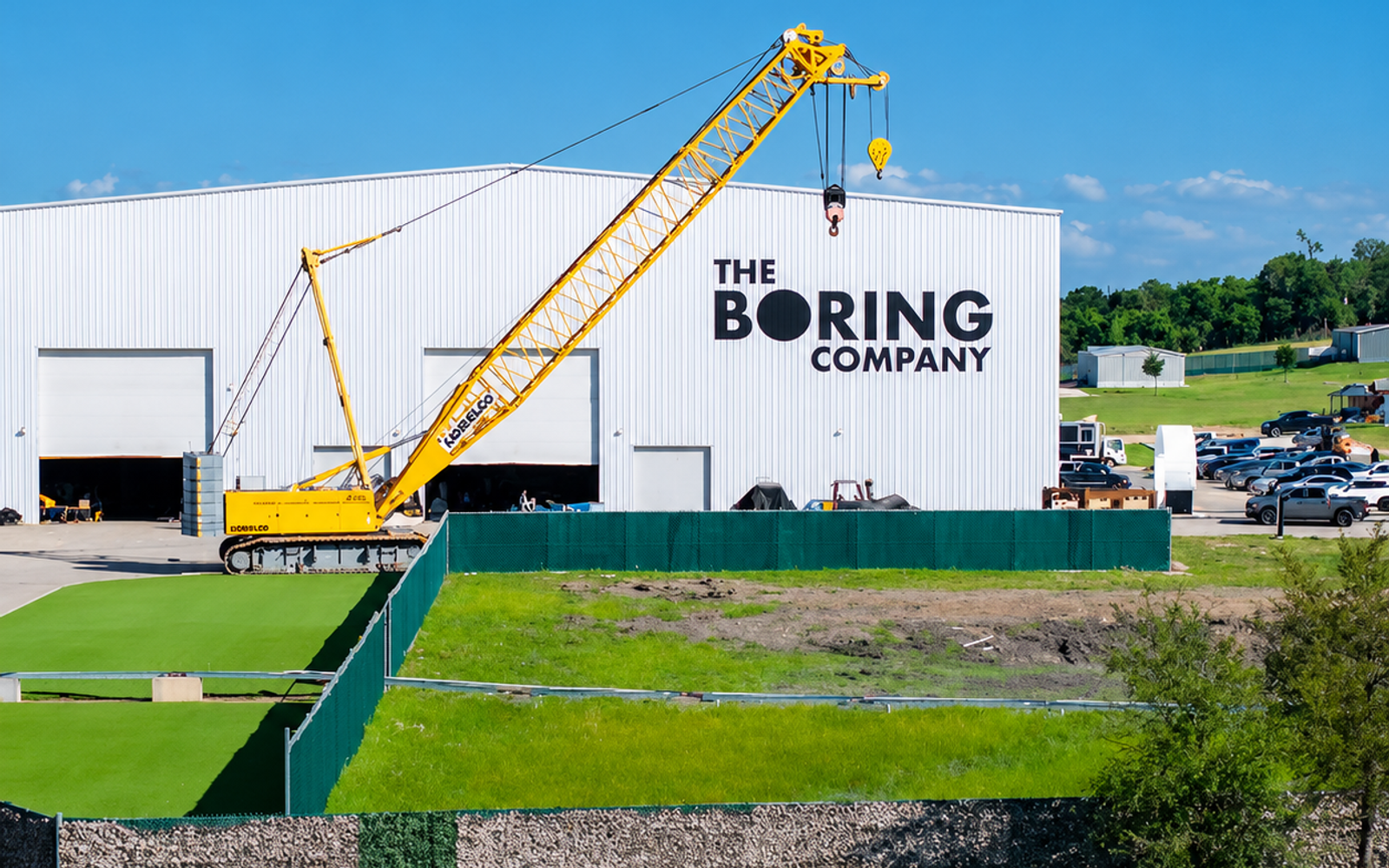
There's a specific moment every builder knows. You've spent years on something unglamorous, something that requires permits, physical space, and patience nobody in venture capital seems to have. Then one morning you open your feed and read that a guy who drills tunnels is suddenly worth $20 billion. The Boring Company, Elon Musk's tunneling venture, is in talks to raise around $4 billion at a valuation of about $20 billion, according to The Wall Street Journal. The deal hasn't closed yet, but the very fact that serious investors are circling should make you rethink what counts as "boring" in business.
Here's the thing worth sitting with: this isn't a software story. It's not a viral app or a neural network that spits out text. It's a company that moves dirt, digs holes, and builds physical transport systems. And the market is valuing that work at the same level as many household-name tech companies. TechCrunch reported on the talks, noting the same wave that carried SpaceX to a record $85.7 billion IPO in June 2026. That confidence hasn't disappeared; it's just moved underground.
For you, the takeaway isn't about owning a boring company. It's about the quiet signal this sends to every founder who's been told their business is too slow, too physical, or too infrastructure-heavy to matter. The people writing big checks are starting to believe that building the hard, tangible stuff is the moat, not the liability.
Why Capital Is Suddenly Comfortable Underground
The shift didn't happen overnight. For a decade, venture money chased asset-light models: software that scaled without factories, apps that grew without trucks. That made sense when interest rates were near zero and growth was the only metric that mattered. But the math has changed, and so has the appetite for things you can touch.
Infrastructure is hard to copy. You can clone a dashboard in a month, but you can't clone a tunnel network or a supply chain that took a decade to build. That durability is exactly what larger investors are looking for after a period of brutal correction in speculative tech. According to the Tech Funding News report, this fundraising lands amid a broader shift in venture investing toward physical infrastructure. The same confidence that backed SpaceX's record IPO is now flowing into the less glamorous parts of the economy.
That doesn't mean everyone can go raise $4 billion tomorrow. But it does mean the definition of "startup" has widened. You can be a founder who owns equipment, signs long leases, and hires people in hard hats. The capital markets are starting to reward that kind of commitment again.
The Leadership Lesson That Carries a Real Cost
Take a moment to think about what running a company like that demands of a founder. You're not iterating on a feature set. You're managing public timelines, local regulations, and construction safety. The kind of discipline the Boring Company needs is closer to running a century-old utility than a growth hack.
There's a parallel here with how you run your own firm, however small. Every business has its version of the "slow tunnel": the client relationship that takes a year to land, the product that needs physical testing, the process that can't be sped up no matter how many tools you buy. The temptation is to abandon that work for something faster. But the founders who last are the ones who treat that slow work as the foundation, not the obstacle.
A recent piece on Entrepreneur.com made a related point: most performance problems are actually communication problems in disguise. When a project drags or a client walks, it's rarely because the work was bad. It's because expectations weren't set early, progress wasn't surfaced, and the other side lost faith. The Boring Company's path has been littered with public misses and delays, yet investors are still paying up. That's because the long game is legible. The asset itself is the story.
When Your Business Model Requires Physical Trust
There's a deeper layer to all this, and it's about what you're actually selling. If you run a service business, a small manufacturer, or a logistics operation, you know that trust isn't built on a demo. It's built on showing up, delivering, and being honest about what you can't do yet. That's the same currency the Boring Company trades in: institutional buyers need to believe the tunnels will actually get built.
That kind of trust has a longer shelf life than virality. It also compounds in ways that are hard to measure on a dashboard. When you stake your reputation on physical delivery, every completed job becomes a reference, and every honest update, even a bad one, becomes proof you're real. You can't fake that with a landing page.
In Lagos, São Paulo, or Singapore, the founders winning are often the ones who embraced the unsexy middle: the logistics network, the cold storage, the last mile, the toll road. The capital that used to ignore them is starting to pay attention. If you're building something that requires permits, patience, and physical presence, that's not a weakness anymore. It's the whole point.
So what does a $20 billion tunneling valuation change for you, the person reading this with a spreadsheet open and a to-do list a mile long? It should mostly change how you talk to yourself about your own progress. If the market can reward a company that literally digs holes for a decade, you can stop apologizing for the quarter that was about consolidation rather than explosion.
The hard part isn't finding the confidence to start. It's holding onto the belief that your slow, tangible work is worth finishing, especially when the noise around you rewards the opposite. Every vertical you aren't building and every shortcut you don't take is the equivalent of choosing the tunnel over the flying car. It's slower, but it's real.
The money flowing to Musk's tunneling venture isn't really about the tunnels. It's about a renewed willingness to pay for things that take a decade to build and can't be copied in a weekend. If that's how you've been building, the market may be coming around to you a little more than you thought. The ground you're standing on isn't boring. It's about to be worth something.
Frequently Asked Questions
Is a $20 billion valuation of The Boring Company realistic?
The deal is still in talks and hasn't closed, according to reports. A $20 billion valuation would put it on par with major tech firms, reflecting investor confidence in physical infrastructure.
What does The Boring Company actually do?
The company builds underground transportation tunnels to reduce surface traffic. It uses tunneling technology and has projects in cities like Las Vegas, with expansion plans including Bastrop, Texas.
Why are venture investors shifting toward infrastructure startups?
After a period of corrections in speculative tech, investors are seeking durable assets that are hard to copy. Physical infrastructure offers long-term value and reliable revenue, making it increasingly attractive.
How can a small founder apply this lesson?
Focus on building the tangible, slow parts of your business that competitors can't easily replicate. Treat every completed delivery or honest update as compounding trust, rather than chasing short-term virality.
Does the SpaceX IPO factor into this trend?
SpaceX's record IPO in June 2026 showed strong market appetite for large, capital-intensive ventures. That confidence is spilling over into other infrastructure-heavy companies like The Boring Company.
Comments (0)
No comments yet. Be the first to share your thoughts.