Batteries Beat Gas. Now the Hard Part.
Battery storage costs fell below gas-fired power plants in June 2026. Chinese overproduction and LFP chemistry rewrote energy economics, but geopolitics complicates everything.

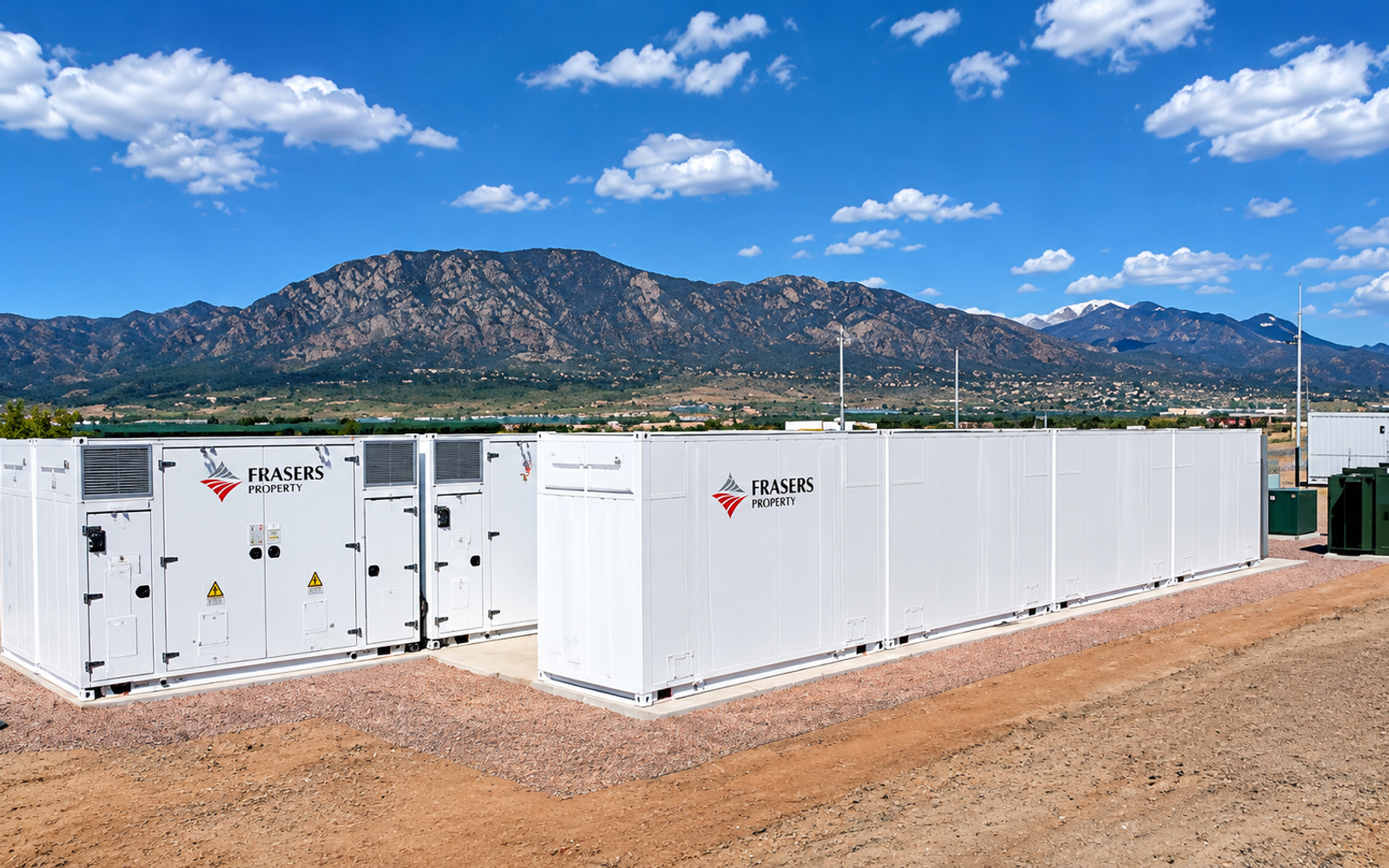
A 40-foot shipping container, bolted to a concrete slab somewhere in the Nevada desert, holds roughly 3.9 megawatt-hours of electrical energy. Enough to keep 130 American homes humming for a day. Two years ago, a utility would have paid around $520,000 for that container and the lithium iron phosphate cells inside it. In June 2026, that same container costs about $310,000. That's a 40 percent drop.
But the number that matters more isn't the price tag on the container.
It's the price per kilowatt-hour of delivered, dispatchable electricity over the system's lifetime. And in June 2026, that number crossed a threshold the energy industry had been circling for years: battery storage became cheaper than building a new gas-fired power plant.
According to Nikkei Asia, the levelized cost of storage for a utility-scale lithium iron phosphate system now undercuts the levelized cost of electricity from a new combined-cycle gas turbine. This isn't a projection for 2030 or a lab-scale curiosity. It's the actual bid price on real contracts signed in May and June of this year.
The 40 Percent Collapse Nobody Planned For
The raw numbers tell a brutal story for natural gas. Battery pack prices fell 40 percent in 2025 alone, driven by a single force: China built way too many factories.
BloombergNEF's 2025 battery price survey, published in December of that year, recorded the global average pack price at $108 per kilowatt-hour. In China, the average was even lower: $84 per kilowatt-hour. For context, the industry had been expecting to reach $100 per kilowatt-hour around 2028. It got there three years early.
This collapse happened because Chinese manufacturers, led by companies like BYD and CATL, built massive production capacity during the electric vehicle boom of 2021 through 2023. When EV demand softened in 2024 and 2025, those factories didn't shut down.
They kept pumping out cells. The overcapacity had to go somewhere.
Read Also
The Cape Is the New Coat, Here’s WhyThat somewhere was grid storage. In December 2025 alone, China installed 65 gigawatt-hours of large-scale battery storage. That's more than the entire United States deployed across the whole year. The numbers are almost absurd. One country, one month, beating an entire continent's annual output.
The Chemistry of Cheap
Not all lithium-ion batteries are the same, and the chemistry that's winning this race matters.
Lithium iron phosphate, or LFP, has been around for decades. We found the safe, boring cousin to nickel manganese cobalt (NMC) chemistry. LFP has lower energy density. A heavier, bulkier cell for the same amount of power. But it also has something NMC can't match: it doesn't catch fire. The olivine crystal structure of the cathode is thermally stable in ways cobalt-based chemistries aren't. An LFP cell can be punctured, overcharged, even heated past 270 degrees Celsius, and it still won't undergo the runaway thermal decomposition that turns NMC cells into torches.
For a car, that weight penalty matters. LFP cars have shorter range. But for a 40-foot shipping container on a concrete pad, nobody cares if the battery weighs a few hundred kilograms more. What they care about is that the cells cost less, last for 6,000 cycles instead of 3,000, and won't burn down the substation.
Short. Brutal. Cheap.
That's the LFP value proposition, and in 2026, it's crushing every other stationary storage chemistry on the market. Utility-scale LFP systems now install for roughly $90 to $130 per kilowatt-hour in China, according to data from Polinovel's grid-scale storage cost guide. Even in the United States, where tariffs and labor costs inflate the number, install prices for four-hour LFP systems have fallen to between $230 and $320 per kilowatt-hour.
The Turbine Squeeze Nobody's Talking About
Here's the irony that makes this moment so weighty. Gas plants didn't lose on their own terms. They lost partly because the alternative got cheaper, but partly because gas turbines themselves got more expensive.
A quirk of global supply chains: the heavy rotating machinery at the heart of a gas plant, the turbine and generator package, is manufactured by a very small number of companies. General Electric, Siemens Energy, Mitsubishi Power. That's basically the list. During the pandemic and its aftermath, these companies struggled with supply chain disruptions, skilled labor shortages, and the sheer complexity of machining the high-temperature alloys that turbine blades are made from. Lead times stretched. Prices climbed.
Meanwhile, batteries are assembled from components that are, in relative terms, commodity items. Lithium carbonate, iron phosphate, graphite, copper foil. The supply chains for these materials have been industrialized at a scale the gas turbine world can't match. You can't mass-produce a 500-megawatt gas turbine the way you mass-produce a battery cell. The turbine is a bespoke piece of heavy machinery. The battery cell is a product of the world's most advanced manufacturing lines, running 24 hours a day.
This asymmetry in manufacturing scalability is the structural reason the crossover happened now and not ten years from now.
The Geopolitical Knot: FEOC and the China Problem
If the economics were the whole story, every utility on earth would be ordering LFP containers from BYD and calling it a day. But economics isn't the whole story. The politics are a mess.
In the United States, the Inflation Reduction Act's investment tax credit for standalone storage, a 30 percent credit that changed the project finance math for the industry, comes with strings attached. Those strings are called FEOC: Foreign Entity of Concern. The rules, which took full effect in 2026, restrict projects from using battery components manufactured by entities linked to China, Russia, Iran, or North Korea.
This is a problem because Chinese companies dominate LFP production.
According to guidance from the Treasury Department, projects beginning construction in 2026 must meet a Material Assistance Cost Ratio threshold that effectively requires over 55 percent of battery component value to come from non-FEOC sources. The tariff picture doesn't help: Section 301 tariffs on Chinese battery equipment rose to 55 percent.
Developers are now juggling two conflicting realities. The cheapest batteries in the world come from China. The most lucrative subsidy regime in the world bars Chinese-made components. The result is a market segmentation that looks almost like two separate economies. Chinese LFP cells for the domestic market and for developing countries with no FEOC restrictions. Higher-cost, non-Chinese supply chains for projects in the United States and, increasingly, Europe.
This is where South Africa enters the picture. The country's Battery Energy Storage Independent Power Producers Procurement Programme, launched in 2024, accelerated sharply in 2026 as global battery prices fell. According to Engineering News, South Africa is poised for record renewables and storage deployments in 2026. The country's grid, plagued by load shedding for years, is a natural market for LFP containers that can smooth out its coal-heavy, unreliable generation mix. And crucially, South Africa has no FEOC restrictions. It can buy the $90 per kilowatt-hour Chinese LFP systems that American developers can't touch.
What $139 per Kilowatt-Hour Does to Grid Planning
The headline number that project financiers are watching isn't the cell pack price. It's the installed cost of a fully functional, grid-connected storage system, including power conversion systems, transformers, site preparation, and balance-of-plant equipment. For North America, that number now sits around $139 per kilowatt-hour for utility-scale four-hour systems, according to industry tracking from BloombergNEF and other analysts.
To understand why that number matters, you have to understand the economics of a gas peaker plant. A peaker is a gas turbine that runs only during periods of high demand. Maybe 500 hours a year. It's expensive electricity on a per-kilowatt-hour basis because the capital cost of the turbine gets spread over very few operating hours. Batteries, by contrast, can charge from the grid during low-price periods and discharge during peaks. They can do this every day, 365 days a year. They have no fuel cost. They have no carbon emissions. And now they have a lower upfront cost too.
A 2026 analysis from the consulting firm Energy Strat, published in their Battery Storage Market Outlook, calls this moment "a complex chess game of geopolitics and project finance." The simple story of falling costs has given way to a fragmented global market where the best technology is often the most politically restricted one.
The 2030 Horizon: 20 Percent Lower Still
Forecasts from multiple analysts converge on a single trajectory: battery prices will fall another 20 percent by 2030. That would put global average pack prices around $65 per kilowatt-hour. The Energy Information Administration and various research firms expect annual additions of solar, wind, and storage capacity between 2026 and 2030 to range from 30 to 66 gigawatts per year in the United States alone. Globally, the numbers are much larger.
But here's the tension that doesn't get resolved by falling prices. Long-duration storage, systems that can discharge for 8, 12, or 24 hours, still relies on chemistries that haven't achieved the same manufacturing scale as LFP. Flow batteries, iron-air systems, compressed air. They exist. They work. But they cost more per kilowatt-hour than LFP, and they lack the vast factory footprint that has driven LFP costs down.
For now, the market is optimizing around four-hour systems. That's enough to shift the daily solar peak into the evening demand period. It's enough to replace gas peakers. It's not enough to handle the multi-day lulls in wind and solar generation that come with a week of cloudy, windless weather.
The cheap battery era has arrived. The storage problem hasn't been solved, not fully. It's just been deferred to a different chemistry, a different manufacturing line, a different factory somewhere in a country that hasn't built it yet.
Comments (0)
No comments yet. Be the first to share your thoughts.