AI's Hidden Leverage: The $27 Billion Template
KKR just warned that the AI buildout is one giant loop. The $27 billion data center structure explains why.

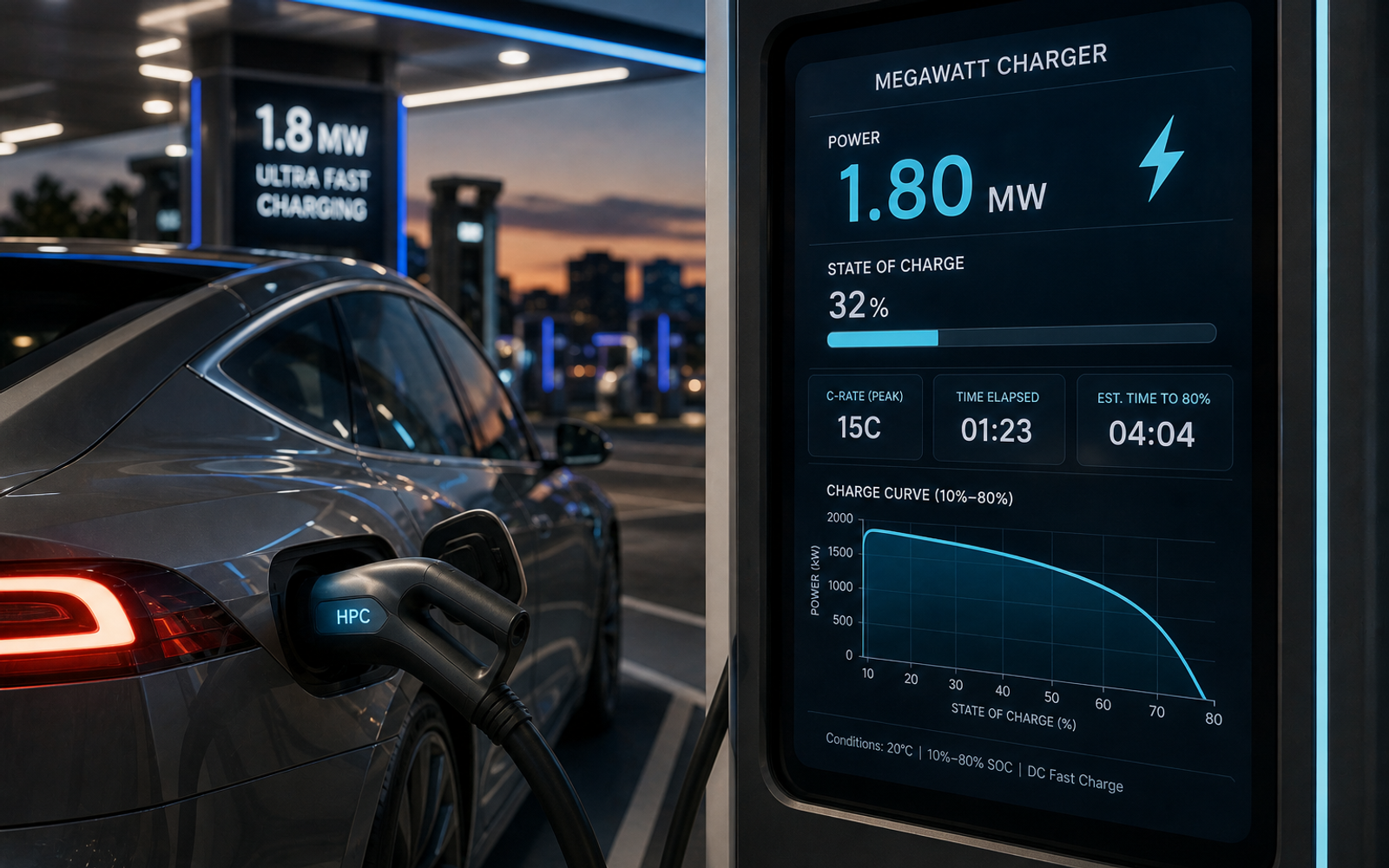
The concrete at Hyperion is already poured. In Richland Parish, Louisiana, a campus of roughly 4 million square feet will eventually draw between 2 and 5 gigawatts of power, and Entergy Louisiana has committed to building three new gas fired plants to keep the servers fed. The scale of the project is what draws attention, but the ownership is what makes it a template. Meta holds 20 percent of the joint venture. Blue Owl Capital, a private credit manager, holds 80 percent. A special purpose vehicle called Beignet Investor issued $27 billion in A+ rated debt to fund construction, then leased the finished campus back to Meta, which reports no matching debt of its own.
That deal closed in October 2025, and it has become the blueprint for the American AI buildout. It's also why KKR's credit team spent this week telling investors to interrogate their own portfolios. Christopher Sheldon, KKR's co-head of credit and markets, and Tal Reback, a managing director in the same group, published a note arguing that issuing hundreds of billions of dollars of debt for AI infrastructure isn't dangerous by itself. What worries them is that the borrowers keep routing through the same counterparties. The Financial Times carried the warning on September 30.
Counting the Money That Doesn't Show Up in the Accounts
A special purpose vehicle is a legal box built to hold one asset and one set of obligations. Project finance has leaned on the trick for decades. A power plant or a toll road gets its own company, lenders underwrite the contracted revenue rather than the developer's balance sheet, and the developer stays clean on paper. Meta applied the same logic to a data center that will cost more than $30 billion. The vehicle owns the building, Meta signs a long lease, and the rent services the debt. Nothing here is hidden: the lease obligations get disclosed, the debt carries a rating, and the lenders knew what they were buying.
At hyperscale, though, corporate debt turns into a credit rating problem. Four hyperscalers bought roughly $434 billion of property and equipment across the four quarters through March 2026, against about $149 billion of reported depreciation over the same stretch. Funding that entirely with corporate bonds would push leverage toward levels the rating agencies would reprice, and a repriced credit raises the cost of everything else the company does. A 20 percent equity stake plus a lease keeps the liability inside someone else's legal entity.
The premium for that arrangement is measurable. Meta priced $30 billion of investment grade bonds shortly after the Hyperion closing at roughly 100 basis points cheaper than the project level debt, and over a 24 year term that spread compounds into billions of extra interest. The company chose to pay more for the same money because of where the liability lands. That decision says something about how much the reported balance sheet still shapes strategy at these firms, even when operating cash flow could carry the borrowing directly.
Replication has been quick. Morgan Stanley has estimated that AI data centers, renewable power and fiber networks will need around $800 billion of private credit between 2025 and 2028. The big five hyperscalers are forecast to spend above $600 billion on capex in 2026, a 36 percent jump, and their combined capex has moved past their free cash flow once buybacks and dividends are counted. A business that used to build from cash flow now returns to the capital markets every quarter.
Why the Diversification Argument Stops Working
Sheldon and Reback's note lands in that gap, and their central claim is precise. "Diversification is harder than it looks when the same short list of counterparties sit behind the equity book, the debt book, and increasingly the infrastructure supporting both," they wrote. Their follow-up sentence names the loop: "Power, chips, cooling, land, leases and financing often route back to the same handful of economic actors." Trace one round. A chip vendor takes a stake in a model developer, the developer signs compute contracts with a neocloud operator, the operator leases capacity from a vehicle financed by a private credit fund that also holds equity in the developer, and the utility serving the campus gets paid from the same revenue stream that services the bond. Those neoclouds are also pulling workloads and data away from the big clouds, which changes who sits at the center of the loop.
That exposure isn't confined to specialist funds. As of August, 31 companies carried more than $500 billion in AI related bonds, and KKR estimates that a fifth of the investment grade index could end up exposed to AI risk. That matters because the index is the base layer of fixed income portfolios for pension funds and insurers in the United States, Europe and Asia. An insurer in Tokyo buying a broad credit index believes it holds hundreds of independent credits. If the same five or six balance sheets sit underneath the software issuer, the utility, the landlord and the neocloud, the correlation is structural rather than statistical. Major American companies have started naming AI exposure among their own risk factors, a sign that the technology's financial footprint now reaches balance sheets with no software business at all, as the Financial Times has reported.
Diversification math breaks in a specific way when a loop tightens. In an ordinary credit portfolio, a default is idiosyncratic. One company fails, the others carry on, and the losses stay contained. In a loop, a slowdown in AI revenue touches the developer's ability to pay for compute, which touches the neocloud's ability to pay rent, which touches the vehicle's ability to service its bonds, which touches the fund holding both the bonds and the equity. The same revenue shock converts into four different kinds of loss, and the correlation between them is one.
Depreciation Is Where the Bill Actually Lands
A GPU is a capital asset, so its cost doesn't hit the income statement the day it's bought. The expense gets spread across an assumed useful life. Extend that assumption from four years to six and annual depreciation falls by a third, lifting reported operating income without touching cash. Between 2022 and 2024, Microsoft, Alphabet, Meta and Oracle each moved their server and networking schedules out toward five or six years. Amazon went the other direction in February 2025, shortening its schedule back toward five years for server classes where the evidence supported it.
The resulting gap between spend and expense is wide, and it's arithmetic. A company buying equipment three times faster than it depreciates that equipment will always report a growing distance between the two lines, and the distance means the charge is scheduled to arrive later. Buildings depreciate across 25 to 40 years while servers depreciate across five or six, so one campus produces a small depreciation charge for several years and a much larger one after that. This is the mechanism behind the argument that the S&P 500's record is an AI earnings story, because reported profit depends on when the expense gets recognized.
Michael Burry has argued the economic life of an accelerator fleet is closer to two or three years, and that the mismatch understates depreciation by roughly $176 billion across 2026 to 2028, a claim CNBC reported. The counterargument holds that depreciation is a policy about revenue generation rather than a stopwatch on physics. If a chip keeps producing inference at a profit, recognizing its cost across the years it earns makes sense. Both sides can be right about the accounting and wrong about the economics, which is why the argument keeps returning every earnings season.
What a Slower Revenue Curve Would Break First
The order of failure matters more than its probability. Lease obligations run on a fixed schedule regardless of utilization, so a vehicle leasing a campus back to a hyperscaler collects rent only while the lessee's business case holds. If AI revenue growth decelerated by a few points, the first visible damage would land in the depreciation and amortization line of the lessee, then in the lease payment, then in the bond, then in the fund holding both sides of the trade. The investors at the end of that chain are often insurers managing long duration liabilities, matching a 24 year bond against a pension promise. That's textbook asset liability management, provided the asset genuinely lasts 24 years and the lessee keeps paying.
Q3 earnings season opens within weeks, and the D&A line is where the argument gets tested with reported numbers instead of models. Two things are worth watching. Whether any operator extends a useful life assumption again, and whether capex guidance holds through the quarter. Amazon reversing its own schedule is a signal that one operator decided the honest number was worth the earnings hit.
The deeper constraint is physical. Roughly $450 billion of the 2026 hyperscaler spend is tied directly to AI infrastructure, and every dollar of it depends on electrons arriving at a substation on schedule. Three new gas plants for one Louisiana campus is the kind of project that takes years to permit and build, and the debt schedule doesn't wait for it. A vehicle holding a 24 year bond against a campus that can't run at capacity has a fixed obligation tied to a variable asset.
What Four-Year-Old Chips Are Actually Worth
Residual value is the input that resists measurement. A bond maturing in 2049 is underwritten against a campus whose shells and substations will plausibly last decades, and against servers that get replaced every few years. Both horizons sit inside the same legal document. Determining what a four year old accelerator is worth requires a functioning secondary market, and the market for used AI silicon is thin, opaque, and dominated by buyers who prefer new parts. Without a reliable resale price, the depreciation schedule stays an assumption rather than a measurement, and the entire credit chain rests on it.
The problem engineers haven't solved is whether the useful life of an accelerator can be defined by workload rather than calendar. A chip serving inference on a stable model can run for years at high utilization. A chip stranded on the wrong side of an architecture change can be economically dead in eighteen months. There's no standard test for telling those two situations apart at the moment of purchase, and until there is, the 24 year lease and the five year depreciation schedule will keep describing different objects, with the difference absorbed quietly by whoever holds the debt when the assumptions meet.
Comments (0)
No comments yet. Be the first to share your thoughts.