The Bond Market Didn't Authorize This Record Close
Seven stocks crossed $25 trillion as the S&P 500 set a record. The bond market is pricing a different future.

The S&P 500 closed at a record on Tuesday, its first since Aug. 13 and its 28th of the year, and the consensus explanation arrived within hours. AI enthusiasm is back. The bull market has been re-fueled. The Magnificent Seven rode to the rescue. Every figure underneath that story is accurate: the index added 44.98 points, or 0.6%, to finish at 7,818.93, the Nasdaq Composite rose 122.48 points to 27,599.79 for a second consecutive all-time high, and the Dow Jones Industrial Average ended 253.38 points higher at 51,521.28.
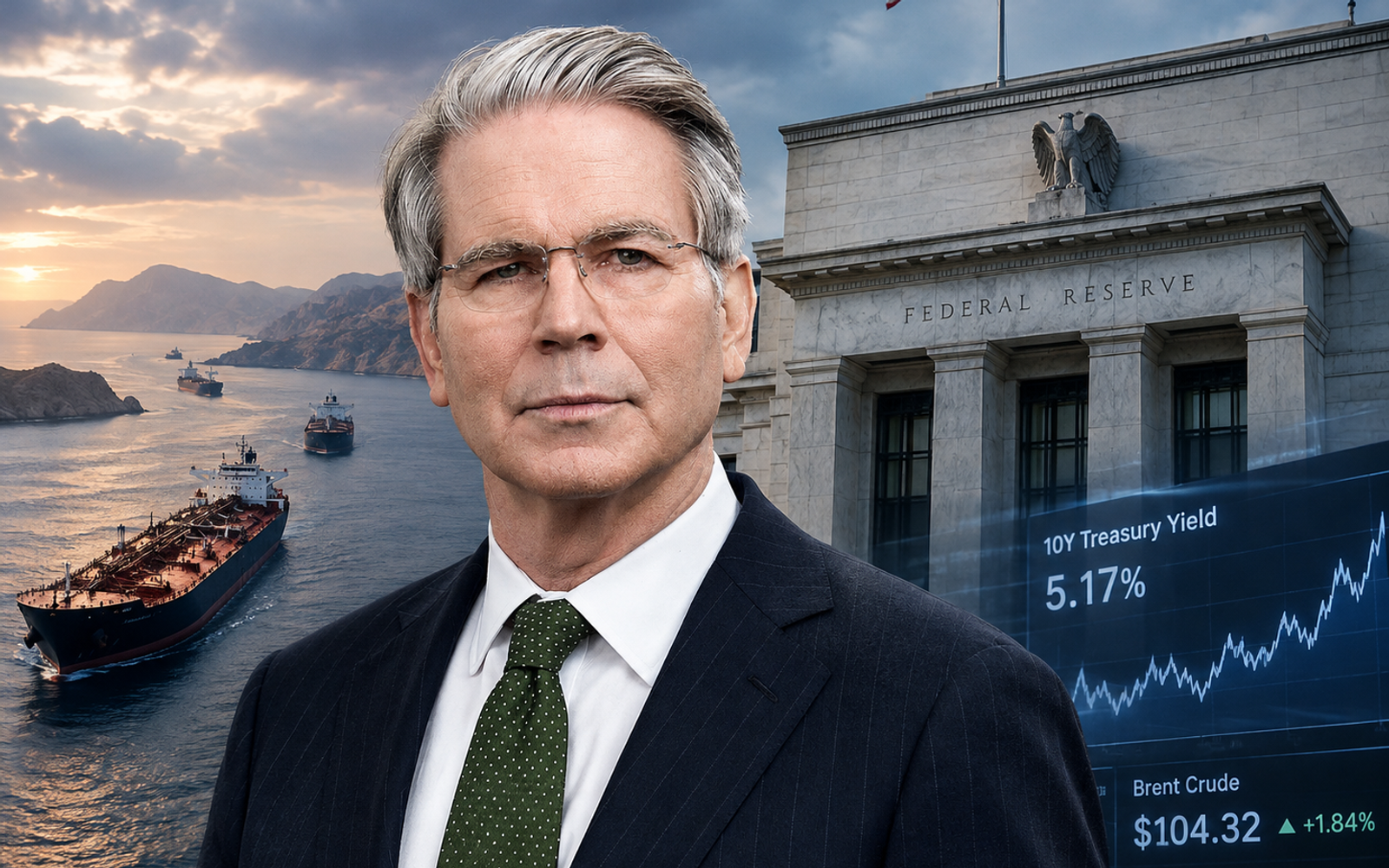
The same session produced a 10-year Treasury yield of 5.27%, a modest retreat from Monday's level, and it came at the end of a stretch in which the 30-year yield touched 5.73%, the highest since 2002. U.S. equities set records while the rate used to discount their future cash flows sits at a 24-year high. That pairing has held for weeks, and it's still a contradiction.
What the record close measures is narrower than a bull market. Seven companies crossed a combined $25 trillion in market capitalization for the first time, according to Dow Jones Market Data. That's the whole of Tuesday's bullish case.
What the Record Close Actually Measures
Between the previous record on Aug. 13 and Tuesday's close, the S&P 500 leaned on a handful of megacap names for its gains, a dynamic that has defined this bull run since it started in October 2022. Tuesday formalized it. Nvidia and Meta Platforms led the advance, and an ETF tracking the Magnificent Seven closed at a record for a second straight session alongside the Nasdaq.
The S&P 500 also touched an intraday high of 7,844.52 and has now risen for four consecutive sessions. Twenty-eight record closes in ten months says less about the economy than about how much of the index is captured by one theme. A benchmark setting records at that pace on the strength of seven names is functioning as a concentrated fund with a broad-sounding name, and investors buying it through an index tracker receive a different product than the label implies.
The concentration itself is the part worth dwelling on, because it has removed the thing index investors thought they were buying. The seven largest names now account for roughly a third of the S&P 500's market capitalization, with the top ten near 40%. Owning the index no longer means owning 500 businesses in proportion to their individual risk. It means owning a leveraged position in the capital spending plans of a few semiconductor and platform companies, with 493 smaller holdings attached as a rounding error.
The historical marker is stark. The cap-weighted S&P 500 has beaten its equal-weight counterpart by some 34% over three years, the widest such gap on record. The 1997 to 1999 episode produced a comparable extreme and resolved with a sharp reversal followed by seven years of equal-weight outperformance. Nothing about concentration alone says a top is in. It does mean anyone reading a record close as evidence of broad economic health is reading an index that no longer measures that.
The Long End Has Stopped Cooperating
The bond market is where this argument gets settled. The Financial Times reported that the global bond sell-off resumed as the 30-year Treasury yield hit its highest level since 2002, and the pressure isn't confined to the United States. Thirty-year French and Italian yields jumped, the UK's 30-year gilt reached its highest since 1998, and the head of the French central bank said ECB intervention isn't needed to ease the rout, which tells you the institution best placed to calm the market has chosen not to try.
Rising yields and rising stock prices are supposed to move against each other, and for most of the past two decades they did. Higher long rates compress equity multiples because distant earnings are worth less when the discount rate climbs. What's changed since the summer is that CNBC noted a fresh 2002 high in the 10-year yield to start the week, while equities climbed alongside it rather than against it. The market has decided that AI capital spending is a large enough earnings story to outrun the cost of capital.
There's a mechanical amplifier underneath the bond selloff that gets less attention than the inflation debate. When mortgage rates rise and refinancing activity stops, the expected life of mortgage-backed securities extends. Investors hedging that duration have to sell longer Treasuries to stay neutral, and those sales push long yields higher, which pushes mortgage rates higher again. That loop doesn't need a new inflation print to keep running. The front end is a policy rate, and the Fed can move it. The 30-year is a market verdict on deficits, issuance and inflation expectations over three decades, and no central bank sets it. That distinction is why the long end has been the harder variable to stabilize all year, and why the equity market's record is being financed by a price it doesn't control.
The bet equities are making carries a condition. It works while earnings revisions arrive faster than the extra compensation investors demand for holding long-dated debt expands. The second half of that condition is not under the equity market's control.
The Seven-Name Comeback Is Narrower Than the Label
The phrase doing the most work in Wednesday's coverage is "Magnificent Seven comeback," and it deserves more precision than it's receiving. Reuters reported in July that the group had posted mixed performance in 2026, with only Apple's 25% year-to-date gain surpassing the S&P 500's increase at that point. The moniker describes seven different businesses with sharply different exposure to the AI cycle, and it trades as a brand rather than a single position.
What rallied on Tuesday was narrower still. Nvidia and Meta did most of the lifting. Those two are the names whose earnings genuinely scale with the AI buildout, and they're the ones carrying the most duration risk if the long end keeps climbing. A group milestone above $25 trillion in combined market capitalization sounds like breadth. On inspection it's two charts doing the work of seven.
That changes how the coming weeks should be read. If the AI trade were broad, the earnings season now beginning would require broad validation. Instead it needs two or three franchises to keep compounding revenue at a pace that justifies a multiple built on a discount rate the bond market is refusing to supply. The bar is higher than the headline number suggests.
A $100 Barrel Is a Tax on Everyone Else
A second cost input is pressing on the other 493 names, and it's easy to lose under the AI headlines. Brent crude edged 0.3% higher to $100.58 a barrel on Tuesday, with traders weighing a pickup in shipments through the Strait of Hormuz against Iran's attempts to curb flows by attacking tankers. Energy at that level feeds into freight, aviation, chemicals, agriculture and consumer staples margins over the following two to three quarters. Shipping insurance and freight rates tend to move on tanker-risk headlines before the barrel does, which means the cost reaches corporate budgets sooner than the spot price suggests.
A megacap platform company is largely insulated from the price of oil. A regional bank, a retailer or a haulier is not, and the equal-weight index is where that shows up first. The result is a market in which the largest seven names can absorb both a 5.7% long bond and a $100 barrel while the average S&P 500 constituent absorbs neither. That divergence doesn't need a recession to widen. It only needs the cost of capital and the cost of energy to stay where they are. The decision to tighten into an oil shock already demonstrated how quickly that combination reaches the long end.
What Q3 Earnings Has to Clear
Positioning is the other input worth tracking. The strength of the seven names has been self-reinforcing because index funds must own more of them as they appreciate, and active managers who underweighted them have spent the year losing to their benchmarks. That flow is mechanical rather than judgemental, and it reverses on the same mechanics when the trend breaks.
The test in the next three weeks isn't whether the megacaps beat. They usually do. The question is whether the AI capital expenditure cycle is producing revenue outside the companies spending the money. If hyperscaler spending shows up as demand at Nvidia and Meta but not as revenue at software, industrials or services, then the earnings power backing the index sits in the same seven names that already carry a third of its weight.
Depreciation is the second thing to watch. A buildout of this scale eventually lands on income statements as a charge, and the market has been patient about the gap between capital deployed and revenue recognized. Higher long rates shorten that patience, because they raise the return every project must clear to justify the spending. The record is already an AI earnings story more than a broad economic one, and the coming quarter will determine whether the label still fits.
The unresolved variable is the long end. A 30-year Treasury near 5.73% and an S&P 500 at 7,818.93 are two markets pricing futures that can't both be right, and equities are the side under pressure to adjust. They hold the option to keep rising as long as earnings outrun the discount rate, and they've exercised it for weeks. The bond market has spent those same weeks saying the cost of that patience is going up. On the evidence, the bond market has the stronger claim, which makes Tuesday's record look like a financing story wearing an innovation costume rather than the base of a new leg.
Disclaimer: This article is for informational purposes only and does not constitute financial advice. Past performance is not indicative of future results. Consult a qualified financial advisor before making investment decisions.
Comments (0)
No comments yet. Be the first to share your thoughts.