The World Cup Kicked Off. So Did Everything Else.
Shakira, Burna Boy, and 48 teams walked into a continent. The real match is culture versus scale.

Shakira hit the stage at the Estadio Ciudad de México on Thursday night, flanked by dancers, pyrotechnics, and the kind of heat that only a woman who has been doing this for three decades can summon. She was joined by Burna Boy, who brought the Afrofusion, and J Balvin, who brought the reggaeton, and somewhere in the middle of it all, a man named Alejandro Fernández sang something that made the crowd sway. The opening ceremony of the 2026 FIFA World Cup was, by every measure, a spectacle. It was meant to be. But here's what stuck with me. The camera cut to the stands, and you saw faces from everywhere. Japanese fans in samurai headbands. Senegalese fans in bright green and yellow. A kid from Minnesota wearing a Mexico jersey. That image, that specific frame, is the whole story.
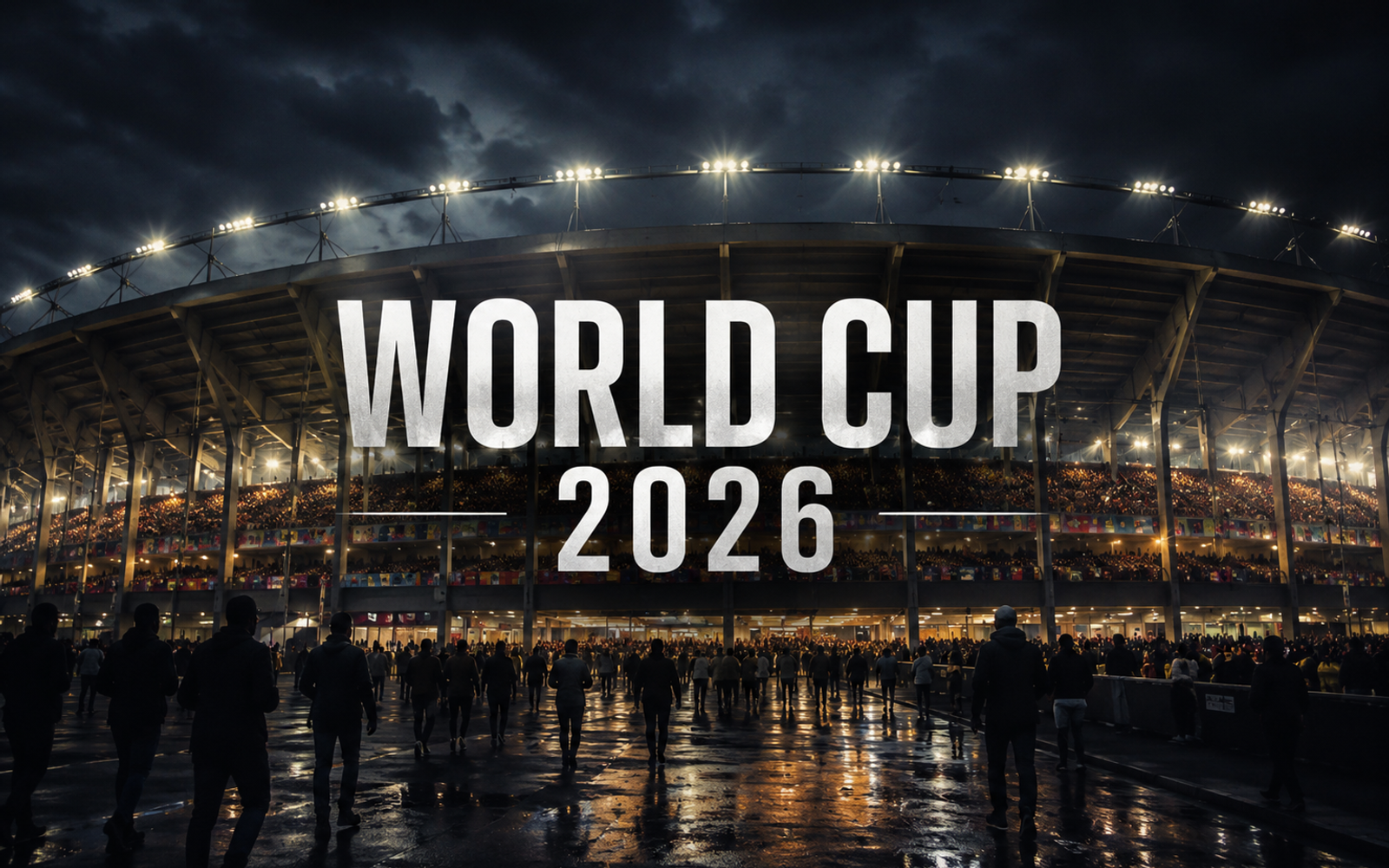
Because this World Cup is not like the others. It can't be. The tournament that began on June 11, 2026 across Mexico, the United States, and Canada is the largest sporting event ever staged. Forty-eight teams. One hundred and four matches. Six weeks. Three time zones. It is, if you think about it for more than a moment, preposterous. But so is everything at this scale.
The Weight of the Thing Itself
The opening match sent Mexico against South Africa at the Estadio Azteca, a stadium that has seen more history than most countries. Mexico won 2-0. Julian Quinones took the Player of the Match trophy, posed for the cameras, said the right things. But the scoreline is almost beside the point. What matters is that this tournament, this bloated beautiful mess of a tournament, is happening at all. FIFA spent years pushing for the expansion from 32 to 48 teams. Player unions pushed back. FIFPRO and the Professional Footballers' Association argued that players were being asked to perform beyond reasonable limits. The schedules were too tight. The travel was too much. The bodies would break. And they were right, technically. Bodies will break. That's what happens when you ask athletes to play eight matches in 39 days across a continent that spans 4,000 miles from coast to coast.
But here's the thing nobody wants to say out loud. The expansion is not about the players. It never was. It's about the image of the thing. A 48-team World Cup looks like the world. It includes Uzbekistan for the first time. It includes Cape Verde. It includes Canada, which qualified automatically as a host but has never been a serious football power. It includes everyone, or close enough that the abstraction works. And the abstraction matters more than the bodies.
The Other Thing That Happened This Week
While the world was watching Shakira's hips and Mexico's counterattack, David Hockney died. The artist was 88, which means he lived long enough to see his work go from "that swimming pool guy" to "the most important living painter" to "a giant of the art world," as King Charles put it in his tribute. The King wrote that Hockney was a "Yorkshireman through and through" and a "dear friend and inspiration." The language was warm, personal, the kind of thing you say when someone meant something to you, not just to the canon. Hockney was one of those rare figures who became famous while still making the work that mattered. His pools. His portraits. His landscapes that somehow made you feel the light.
And I couldn't help but notice the collision. On one screen, a football match. On another, a life's work. Two kinds of scale. Two kinds of immortality. The World Cup is designed to be consumed in moments. Six-second clips. Memes. Arguments about offside calls. Hockney's work was designed to sit with you, to settle into your bones over years. Both are culture. Both matter. But only one of them has a closing ceremony scheduled.
The Olivia Rodrigo Problem
Also this week, Olivia Rodrigo released her third album. It's called "you seem pretty sad for a girl so in love," which is a title so specific and cutting that you know exactly what you're getting before you press play. The critics are already circling. Pitchfork gave it a thoughtful review. Clash called it "unfiltered honesty." The Harvard Crimson thinks "drop dead" is the song of the summer. And look, I am not going to pretend that an Olivia Rodrigo album is as important as the World Cup or the death of a titan of modern art. But it is a data point. It is evidence that the culture machine keeps spinning, regardless of what else is happening.
Rodrigo is 23 now. She has been famous for most of her adult life. Her first album, "SOUR," was a document of teenage heartbreak so precise that it became a generational touchstone. Her second, "GUTS," was looser, funnier, more confident. This third one, based on early listens, is something else. It's wiser. Less interested in being right than in being true. And she released it on the same weekend that 48 teams began competing for a trophy made of 18-karat gold. That is not a coincidence. That is the texture of modern life. Everything happens at once. Nothing gets your full attention. And we call that a culture.
The Merger Nobody Can Ignore
Warner Bros. Discovery and Paramount. The names sound like law firms from a 1980s movie, but they are, in fact, the last remnants of something that used to be called Hollywood. The U.S. Justice Department approved the $111 billion merger this week. That number is so large it stops meaning anything. But what it means in practice is that two of the last major studio systems are becoming one. CBS, Paramount Pictures, Warner Bros., HBO, CNN, all of it under the same umbrella. The cultural implications are staggering. Fewer decision-makers. Fewer points of view. More algorithms shaping what gets made.
And here's where it gets strange. The World Cup is, at its core, a broadcast event. It exists for television. It exists for streaming. It exists for the moments when a billion people watch the same thing at the same time. That kind of scale is becoming rare. The merger of Warner Bros. and Paramount is a bet that scale still matters, that owning the content and the pipeline and the distribution is worth a hundred billion dollars. The World Cup is proof that they might be right. But it's also proof that the thing people actually want, the thing they will stop scrolling for, is not a corporate product. It's real. It has stakes. It has a score.
The Liquidity Drain Nobody's Watching
The World Cup costs money. A lot of it. Host cities across North America have poured billions into infrastructure. Stadium upgrades. Transit expansions. Security apparatuses. San Antonio spent $15 million on bus routes. Atlanta invested $30 million in hotel upgrades. These numbers are small in the grand scheme of a tournament that Boston Consulting Group estimated could generate more than $5 billion in economic activity. But the distribution of that money is uneven. The question nobody wants to ask is: who actually benefits? The hotels, yes. The airlines, absolutely. The broadcasters, certainly. But the street vendor in Mexico City who sells tacos outside the stadium? Maybe. The Uber driver in Toronto who sits in traffic for three hours? Unlikely.
This is the part of the World Cup that doesn't make the highlights reel. The economic friction. The displacement. The way a city transforms itself for six weeks and then has to figure out what to do with the leftover infrastructure. Hosting a World Cup is like throwing a party that you can't leave. The guests will go home. The decorations will stay.
The New Shape of Fandom
I spent Thursday night watching the opening match in a bar in Brooklyn. It was packed. There were Mexicans and South Africans and Americans and Koreans and a group of Irish guys who had clearly taken the day off work. The energy was the opposite of cynical. People were leaning forward. They were yelling at the screen. They were hugging strangers when Mexico scored. And I realized something. The algorithm tells us that we are divided. That we live in bubbles. That we cannot agree on basic facts. And then something like this happens, and a thousand strangers in a bar in Brooklyn are on their feet, roaring at the same moment, in the same language.
This is not a sentimental point. I am not saying sports will save us. But I am saying that the experience of collective attention, of watching the same thing at the same time, is becoming exotic. We have atomized our entertainment. We watch what we want, when we want, on the device we want. The World Cup is a throwback. It demands simultaneity. It demands that you be somewhere, anywhere, when the ball goes in. That is its power. And that is why, despite all the valid criticisms of corruption and exploitation and scale, it still matters.
Hockney and the Long Game
David Hockney was not a football fan, as far as I know. He was a man who spent decades looking at light, at water, at the way color behaves. His work asked you to slow down. To look longer than you wanted to. To notice the things you had trained yourself to ignore. That is the opposite of a World Cup, which asks you to react instantly, to decide in a fraction of a second whether a goal was offside, whether a tackle was a foul, whether a game was won or lost. And yet both are acts of attention. Both demand something from you. The difference is duration. Hockney's paintings are made to be lived with. A World Cup match is made to be consumed and forgotten.
But here's the thing. The people who remember the 2026 World Cup, who will talk about it in 2046, will not remember the scores of every match. They will remember a feeling. The heat in Mexico City. The cold in Toronto. The moment their team scored. The way the light looked through the stadium roof. That is Hockney's territory. That is the territory of art. The World Cup is a sporting event, but it is also a machine for generating memory. And memory, when you strip everything else away, is the raw material of culture.
The Album That Dropped Into the Storm
Olivia Rodrigo's new album debuted at number one on streaming platforms within hours of release. That is not surprising. She is one of the few artists left who can move units, which in 2026 means something different than it did in 1996 or 2006 or even 2016. What is surprising is that the album is good. Not just good for a pop star. Good in the way that makes you stop and listen. The title track, "you seem pretty sad for a girl so in love," is a devastating piece of songwriting. It is about the gap between how things look and how they feel. It is about performing happiness. It is about the exhaustion of being seen.
And I kept thinking, as I listened to it on the subway on Friday morning, that this is what the World Cup is about too. The performance of joy. The pressure to be excited. The way we are all expected to participate in the collective mood, even when we are, privately, something else entirely. The tournament is a stage. But so is every Instagram post. So is every TikTok. So is every album. We are all performing something, all the time. The question is whether we know we are doing it.
The Thing About 104 Matches
That number. 104. It is almost too many. The tournament will run from June 11 to July 19, which is 39 days of football, basically nonstop. There will be days with four matches. There will be days when you can watch from morning until night. There will be fatigue. There will be burnout. There will be moments when even the most dedicated fan cannot bring themselves to watch another group stage match between two teams they have never heard of. And that is fine. That is the point.
The expansion to 48 teams is not designed for the hardcore fan. It is designed for the casual fan, the person who watches the World Cup once every four years and wants to see their country, any country, represented. It is designed for the diaspora. There are millions of people in North America who come from countries that never qualified for the old 32-team format. Now they do. Uzbekistan. Cape Verde. Trinidad and Tobago. These are not football powers. But they are places. They have people. Those people will watch. That is the arithmetic of the thing. 48 teams is not about quality. It is about reach.
The Ceremony and the Signal
Shakira has performed at more World Cups than most players have attended. She was there in 2010 with "Waka Waka." She was there in 2014. She was there in 2018, indirectly, through the sheer gravitational pull of her catalog. And now she was there in 2026, older, wiser, still able to command a stage. There is something comforting about that continuity. The faces change. The teams change. The geopolitics change. But Shakira will be there, shaking her hips, reminding you that some things survive.
Burna Boy was a different signal. He represents the ascendance of African pop music, which has been the most interesting musical story of the last decade. The fact that he shared the stage with J Balvin and Los Ángeles Azules and Maná is not an accident. FIFA programmed the opening ceremony to reflect the host continent, but also to reflect the world. That is the tagline of this tournament. "The world is coming." And it is. But the world was always here. The world lives in North America. The tournament is just making it visible.
The Thing Nobody Is Ready For
The final will be on July 19 at MetLife Stadium in New Jersey. It will be watched by more than a billion people. It will be the end of a journey that began with Mexico beating South Africa in a stadium that was built in 1966, the year England won its only World Cup. That span, 60 years, is almost exactly the span of David Hockney's career. He made his first important paintings in the mid-1960s. He was still working in the 2020s. The World Cup started in 1930. It has been played through wars and boycotts and pandemics and scandals. It keeps going. That is the lesson. The tournament persists. The art persists. The music persists. We are just passing through.
Olivia Rodrigo will release more albums. Shakira will perform at more ceremonies. The Warner Bros./Paramount merger will close, and then someone will buy that company too. The culture machine does not stop. It does not take a break. It does not pause for mourning or celebration. It just keeps producing, keeps churning, keeps asking for your attention. The only question is what you give your attention to. And maybe, in a week when a 48-team tournament kicked off across an entire continent, the answer is: everything. Or nothing. Or something in between.
I watched the opening ceremony from a bar in Brooklyn. I listened to the new Olivia Rodrigo album on the train. I read the tributes to David Hockney on my phone while waiting for coffee. I checked the score of Mexico-South Africa between meetings. This is what a culture looks like. Not a single story, but a hundred of them, playing simultaneously, demanding different kinds of attention, operating at different scales. The World Cup is the biggest thing that happened this week. But it is not the only thing. And that, maybe, is the only conclusion worth reaching.
Comments (0)
No comments yet. Be the first to share your thoughts.