The Year's Biggest Movie Deleted Its Own Homework
Spider-Man: Brand New Day just took a decade-old record. Star Wars' homework-heavy Mandalorian did the opposite.

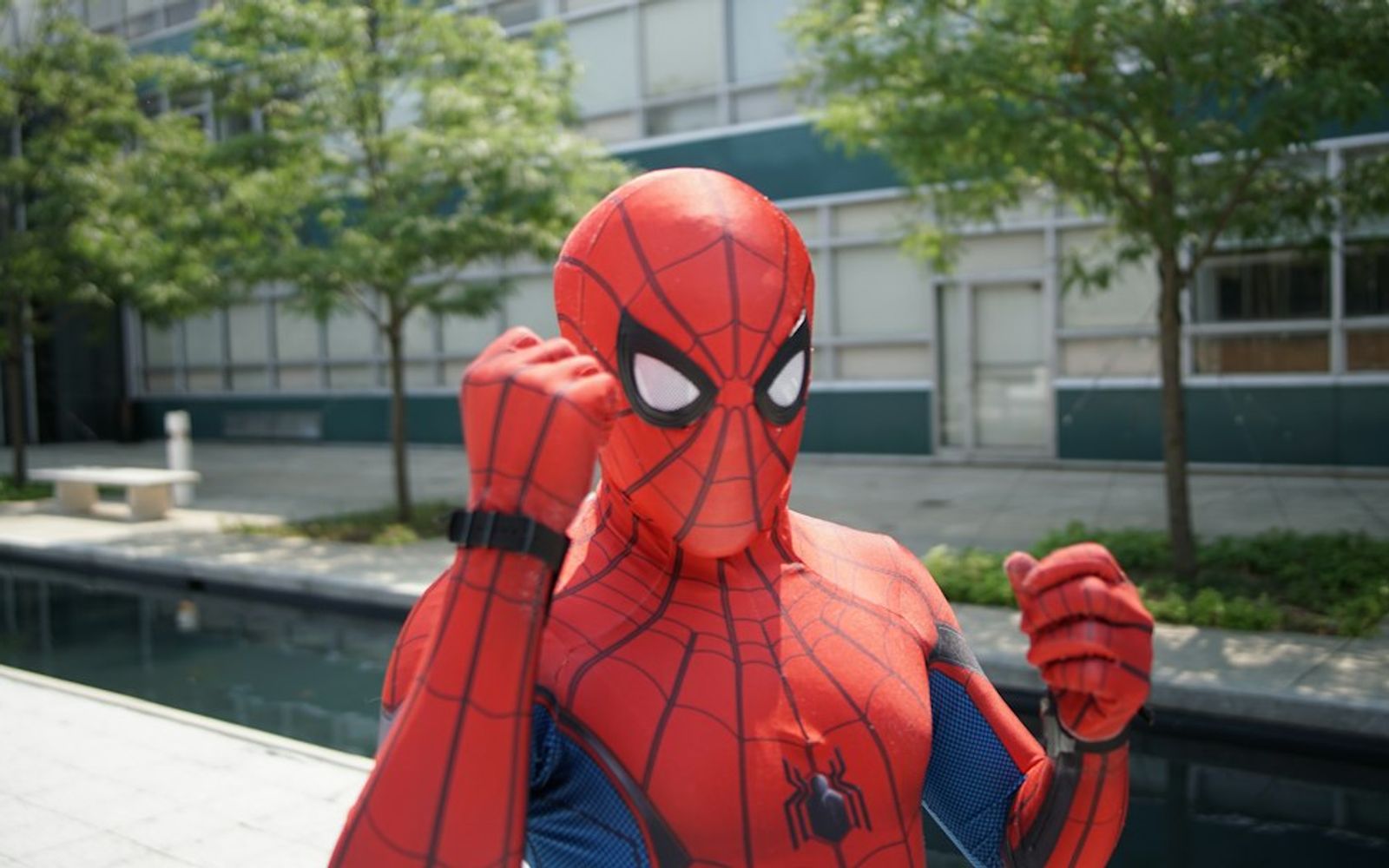
On September 17, Spider-Man: Brand New Day passed Star Wars: The Force Awakens to become the highest-grossing film in North American box office history, banking north of $935 million in domestic tickets on its way past a record that had stood for a decade. It cleared $2 billion worldwide in its third weekend, one of only a handful of films ever to do it, and it now sits at $2.34 billion. The strange part is what the movie is actually about. Peter Parker has been erased from the memory of everyone who loves him, and the plot runs on that hole for two hours.
So the biggest movie of 2026 is a continuity wipe. It landed in the same year that the franchise most obsessed with continuity released a film that only fully works if you've already spent weeks on a streaming service. The Mandalorian and Grogu took $102 million across the four-day Memorial Day weekend, the weakest opening for a Star Wars film since Disney bought Lucasfilm in 2012, as The Guardian reported. It then dropped 69 percent in its second weekend.
Two blockbusters, two theories about who's actually in the room. One assumes you did the reading before you bought the ticket. The other hands the audience an eraser in the opening scene, and the audience came back for seven straight weekends.
What Happens When the Prerequisite Is a TV Show
The Mandalorian and Grogu isn't a standalone film, whatever the marketing suggested. Its protagonist's arc lives across multiple seasons of television, and the film gathers up threads from a Disney+ series that plenty of viewers watched in a completely different phase of their lives. Walk in cold and you still get an adventure, but the payoffs belong to somebody else.
That gap between what a franchise assumes and what its audience has actually seen is now the central design problem in Hollywood. CNBC reported in January that sequels and franchise entries keep falling short of expectations and dragging on a box office that hasn't climbed back to pre-pandemic revenue. Variety's first franchise scorecard, published last September, found Marvel diminished, DC rising, and the industry's most anticipated revival to be James Bond. Note that nobody has ever described Bond as difficult to enter.
Then there's Avengers: Doomsday, which arrives on December 18 and pulls on characters from roughly two decades of interconnected films and shows. The marketing hasn't started in earnest. The homework was assigned years ago.
Watch Orders Are a Retention Product
Type "MCU watch order" into a search bar and you'll get thousands of pages, most of them fan-written, few of them agreeing with each other. Disney+ now does the job in-house with a tab that reshuffles its own library. Rotten Tomatoes maintains chronological and release-order guides side by side. The watch order has become the softest form of canon enforcement, which is a polite way of saying it's a subscription feature with a reading list attached.
The economics are easy to see. A watch order turns a catalogue into a queue, and a queue is a reason to keep paying in February. It's a bit like a fine that changes nothing about the market it targets: the guidance gets published, the list gets longer, and the films themselves sit exactly where they were. What changes is the viewer's weekend, now spoken for.
Every franchise ships with an onboarding template, the way a celebrity romance ships with a press plan. The order is the template. It's meant to make 60 hours of storytelling feel like a manageable evening, and it works often enough that nobody has stopped making them.
The Orders That Actually Hold Up
Star Wars rewards release order on a first pass, and it has for fifty years. Rogue One, which ends about ten minutes before A New Hope begins, slots most comfortably there on a second run rather than as a starting point. Watching the saga chronologically means opening with three films whose entire appeal is watching a tragedy you already know the ending to.
The MCU is a release-order franchise. Chronological works as a rewatch project and as a trap for newcomers, since it begins with movies that assume you've already met the characters. With Doomsday about twelve weeks out, a first-time viewer can cover the essentials without touching the television spin-offs at all.
Bond is the exception that settles the argument about order generally. Twenty-five films, several soft reboots, and no sequence that survives contact with an actual viewing. The honest approach is curation: the first three Connery films, the five Daniel Craig films as one continuous arc, and everything else as a la carte. Amazon MGM is still casting the next one, with Denis Villeneuve directing, and the studio has spent the past year saying it won't rush. As Amazon MGM executives told CinemaCon, per The Guardian, the plan is to "take the time to do this with care and deep respect."
And Middle-earth closes the case. Peter Jackson's Lord of the Rings films are the trilogy that came first in cinemas and second on the timeline, and almost nobody tells a newcomer to start with The Hobbit. The consensus watch order runs backwards through the chronology because the register, the performances and the emotional logic were all set by the later-set films. Order, it turns out, is about meaning rather than dates, and the people writing those guides know it even when they pretend otherwise.
Peter Parker's memory hole might be the cleanest franchise design decision of the year, and no marketing department wrote it. It came out of the storytelling, from people who understood that a ticket, a streaming subscription and four evenings of a viewer's month are all competing for the same slot. Every watch order guide in existence is a small apology for that cost. The film that just took the domestic record found a way to charge less, and the record came back.
Comments (0)
No comments yet. Be the first to share your thoughts.