Three Companies, One Market, Your Higher Price Tag
Behind Apple and Microsoft's price hikes sits a memory chip oligopoly that learned scarcity pays better than abundance.

In a fabrication plant in Yongin, South Korea, machines etch circuits onto silicon wafers at a scale measured in atoms. Those wafers leave the cleanroom cut into rectangles of memory. Every one of them has a destination assigned months in advance. The question beating at the center of the global electronics industry this week is which destination gets priority.
Two of those wafers are identical until the moment they leave the fabrication line. One becomes high-bandwidth memory for an Nvidia H200 AI accelerator. The other becomes the DDR5 stick inside a MacBook Pro. Same factory. Same raw silicon. Same lithography tools. But the first stack sells for roughly $300 per unit. A standard 16GB DDR5 module carries a contract price under $20. The choice for the manufacturer is not a choice at all.
This is the mechanism behind the price hikes Apple and Microsoft announced this week.
On Thursday, Microsoft said it would raise Xbox prices by $100 to $150 from August 1, blaming storage and memory costs that have more than doubled since last fall. Apple, days earlier, adjusted iPad and MacBook prices upward by as much as 25 percent in some configurations, with CEO Tim Cook confirming to the Wall Street Journal that the company could no longer absorb the chip costs.
The dominant explanation now circulating is simple. AI demand is eating the world's memory supply. Consumers are picking up the tab. That explanation is not wrong. But it is incomplete in a way that matters.
The Oligopoly That Sets Your Gadget's Price
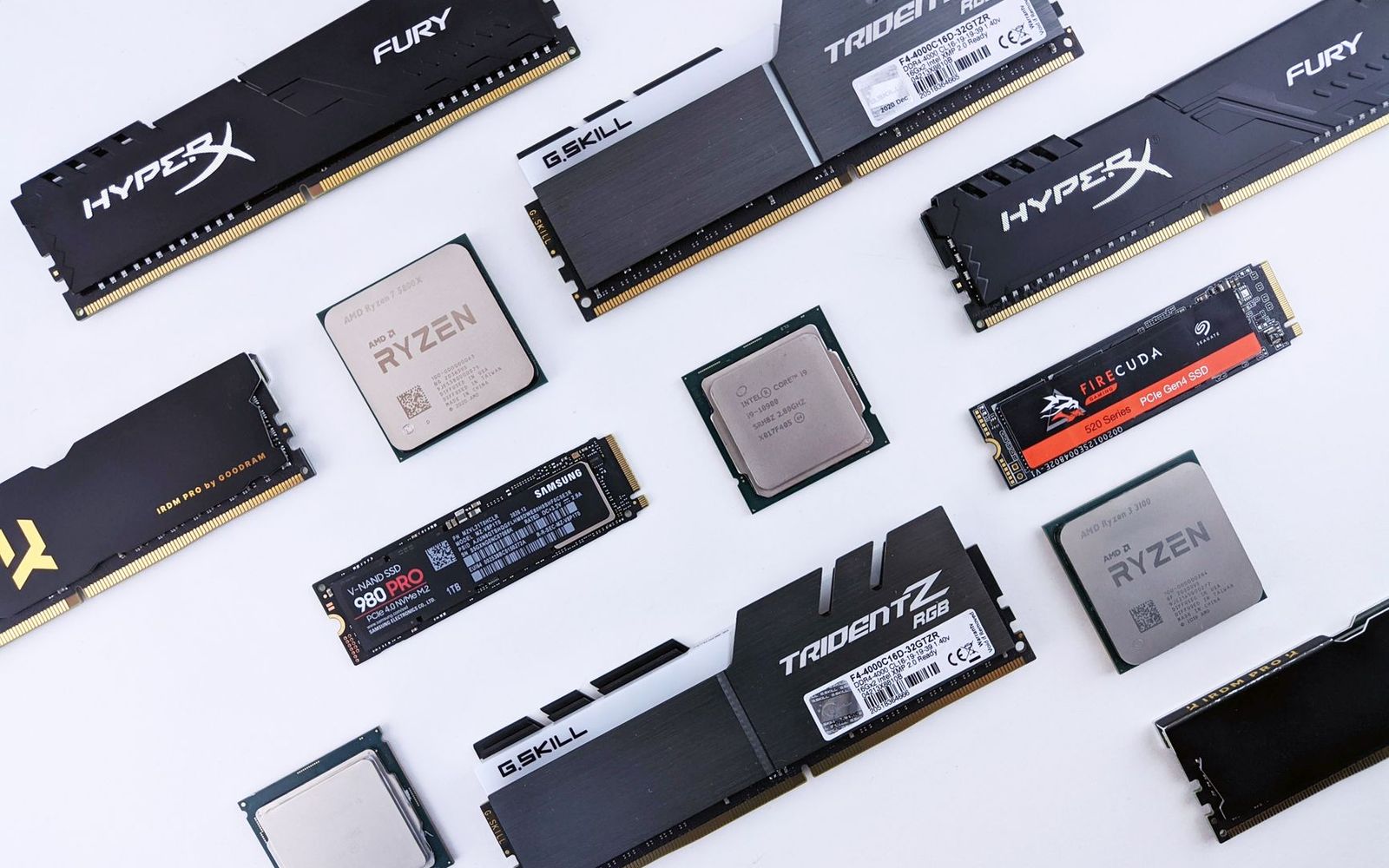
The market for memory chips is not a free market in any meaningful sense. Three companies Samsung Electronics, SK Hynix, and Micron Technology control more than 90 percent of global DRAM production and roughly the same share of NAND flash. Together they decide how much memory gets made, what kind gets made, and what it costs.
This concentration is the result of decades of capital consolidation. Building a leading-edge DRAM fab costs roughly $20 billion and takes three years to bring online.
Samsung spent more on capital expenditure in 2025 than all but a handful of countries spend on entire defense budgets. The barriers to entry are not high. They are vertical.
In such a market, price signals do not work the way textbooks describe. When demand rises, the three incumbents do not automatically increase supply to meet it. They increase supply just enough to maximize revenue without crashing prices. They have done this long enough to develop institutional instincts for where that line sits.
What Changed This Cycle
The difference this time is that AI demand has given the memory giants a new highest-margin product to allocate wafers toward. High-bandwidth memory stacks, the specialized DRAM packages that sit directly on AI accelerators, consume roughly three times the wafer area of a standard DDR5 chip. They also command prices that make the trade-off trivial.
According to data from Silicon Analysts, HBM3 memory stacks trade at roughly $200 per unit in 2026. HBM3E, the current generation used in Nvidia's H200 and B200 accelerators, runs about $300 per stack. HBM4, expected to enter mass production in the second half of 2026, is estimated at $500 per stack. Compare that to a standard 16GB DDR5 module with a contract price under $20. The margins on HBM are not better. They are an order of magnitude better.
The industry response has been unmistakable. Samsung, SK Hynix, and Micron have shifted roughly 93 percent of their combined DRAM production capacity toward HBM. HBM now consumes 23 percent of all DRAM wafers globally, up from less than 5 percent two years earlier. The wafer allocation toward standard DDR4 and DDR5, the memory that goes into laptops, desktops, consoles, and every other consumer device, has collapsed correspondingly.
The Squeeze in Two Numbers
The price data makes the consequences plain. DRAM contract prices surged 90 percent in Q1 2026 alone compared to Q4 2025. NAND flash, the storage technology in solid-state drives, has seen even steeper increases. Contract prices for NAND rose 70 to 75 percent quarter-over-quarter in Q2 2026. Storage and memory costs have more than doubled since last fall, Microsoft confirmed in its price hike announcement.
These are not modest bumps. They are the kind of cost increases that restructure product margins across entire device categories. Apple's decision to raise iPad and MacBook prices by up to 25 percent is not a reaction to a minor input cost fluctuation. It is a recognition that the baseline cost of memory has shifted.
Or at least, that is the argument Apple and Microsoft are making.
Who Feels This First
The price increases from Apple and Microsoft make headlines because their products sit in living rooms and offices around the world. But the same cost pressures landing in Cupertino and Redmond hit much harder on hardware makers with less market power.
In Shenzhen's Huaqiangbei electronics market, where thousands of small and medium component vendors and device assemblers operate on spot pricing and thin margins, the memory cost surge has forced a series of compromises. A 15 percent increase in DRAM costs can wipe out the entire profit margin on a budget tablet intended for markets in Southeast Asia or Latin America. The response is not a clean price increase passed to consumers. It is a degradation in quality. Slower storage. Shorter warranty periods. Components swapped for cheaper equivalents. The consumer never sees a headline about why their device runs slower than last year's model.
In Nairobi, the picture is similar but with an added layer. Kenya applies a 25 percent import duty on computers, plus VAT and additional taxes. The Kenya Private Sector Alliance has flagged rising input costs for electronics assembly in its submissions to parliament on the Finance Bill 2026, warning that embedded production costs are undermining affordability and long-term investment in local manufacturing. When memory prices rise globally, they compound with existing tariff structures in markets where the import bill is already heavy. The same MacBook or budget laptop costs significantly more in Nairobi than in New York, and the gap widens with every price increase.
Sony and Nintendo have also raised console prices in recent months, making the same argument Microsoft is making. The pattern is industry-wide. But the capacity to absorb cost increases varies enormously.
What Apple and Microsoft Could Do Differently
Both companies hold enormous leverage over memory suppliers. Apple is Samsung's single largest customer for DRAM and display panels. Microsoft buys NAND flash in exabyte quantities for Azure's data centers. If either company decided that the current price increases were unacceptable, they would have options.
They could threaten to accelerate qualification of Chinese memory manufacturers like CXMT and YMTC, which are building domestic DRAM and NAND capacity despite US export restrictions. They could invest in alternative memory technologies such as magnetoresistive RAM or computational storage that reduces reliance on conventional DRAM and NAND. They could sign long-term supply agreements that lock in prices below spot levels, which they almost certainly already do for a portion of their volume.
What they are not doing is absorbing the cost increases through margin compression. That is a choice, not a constraint. When Tim Cook told the Wall Street Journal that Apple could no longer shield customers from soaring chip costs, the statement describes a decision, not a physics problem. Apple's gross margins on hardware remain among the highest in the industry.
NovaRift covered this dynamic earlier this year in The Chip Shortage That Isn't a Shortage at All, examining how supply chain narratives often obscure the structural decisions driving price movements. The memory market is the clearest case yet.
The Capacity Question That Looms
The strangest fact about the current squeeze is that it is not caused by a physical shortage of fabrication capacity. Samsung, SK Hynix, and Micron could build more DRAM fabs. They have the cash and the engineering talent to do so. Samsung alone holds over $70 billion in cash and equivalents. What they lack is the incentive to flood the market with supply and crash prices.
The memory industry has been through this cycle before. In 2021, a similar demand surge driven by pandemic-era PC buying and data center expansion led to a capacity race. Samsung and SK Hynix built new fabs.
By 2023, oversupply had driven memory prices into the ground, and Samsung's semiconductor division posted its worst profits in over a decade. The companies learned the lesson. They are not repeating it.
New capacity is coming. SK Hynix is building a dedicated HBM fab in Yongin scheduled to come online in 2027. Micron's Idaho DRAM fab is also expected later this year or early next. But the new output will be overwhelmingly allocated to HBM for AI data centers, not to the consumer memory that goes into MacBooks and Xbox consoles. The structural reallocation of wafer capacity toward the highest-margin product is not a temporary adjustment. It is the new baseline.
The Open Question
The research consensus among memory industry analysts is that the current price cycle has not peaked. DRAM prices are expected to continue rising through at least the third quarter of 2026, with NAND following a similar trajectory. The question is what happens when the new HBM fabs come online in 2027 and 2028. If they add enough capacity to satisfy both AI demand and consumer demand, prices could stabilize. If AI demand continues to grow at its current trajectory, the squeeze persists.
But the deeper point is structural. The memory chip market has been transformed by AI demand from a cyclical commodity into a structurally tight market.
The three companies that control it have learned that scarcity is more profitable than abundance. They have a narrative AI demand that justifies every price increase. And they have customers Apple, Microsoft, and every other device maker who have demonstrated that they will pass prices through to end consumers rather than absorb them.
The cleanrooms in Yongin and Boise are running at full capacity. Every wafer that leaves them has a destination. The question nobody can answer yet is whether the market has enough wafer starts to serve both the AI data centers and the rest of the world. The three companies that control the answer are not saying. They do not need to. The prices are telling the story for them.
Comments (0)
No comments yet. Be the first to share your thoughts.