Apple Just Put a 20-Billion-Parameter Brain in Your Pocket
At WWDC 2026, Apple unveiled Siri AI powered by a 20B-parameter on-device model. The privacy-first bet reshapes the AI assistant race.

The number 20 billion gets thrown around a lot. Twenty billion dollars. Twenty billion views. Twenty billion parameters crammed into a slab of glass and aluminum that fits in a back pocket. That last one is the stunner.
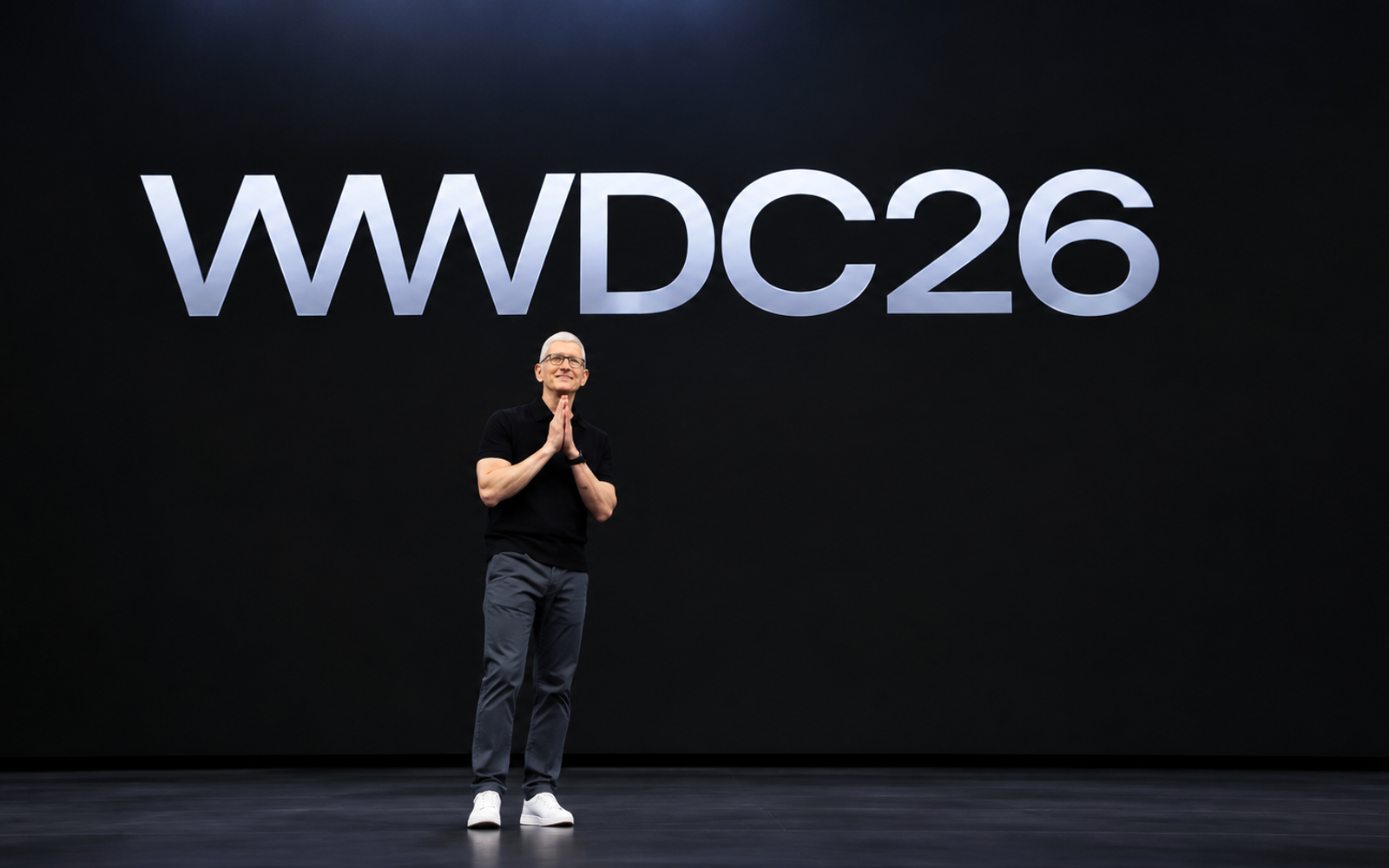
At WWDC 2026 on June 8, Apple did something that, on paper, sounds impossible. The company showed off a 20-billion-parameter language model, the AFM 3 Core Advanced, running entirely on an iPhone. Not in the cloud. Not on some distant server farm cooled by river water. On the device, powered by the A19 Pro system-on-a-chip. The model doesn't load all 20 billion weights at once. It activates somewhere between 1 and 4 billion per request, a trick called sparse activation that makes the whole thing fit within the phone's thermal and power budget. But the full parameter count remains there, latent, ready.
Apple calls the product Siri AI. The old Siri, the one that stumbled over multi-step requests and couldn't hold a thread across apps, is being replaced by a context-aware assistant that can inspect what's on screen, reference personal information stored on the device, and act across applications in a single conversational flow according to Windows Forum's coverage. The rollout starts with a developer beta, with broader availability expected later in 2026.
The Mechanics of Keeping 20 Billion Parameters Cool
Large language models are hungry. A standard 20-billion-parameter dense model running on a phone would turn the chassis into a hand warmer within seconds. The battery would drain in minutes. This isn't speculation, the physics of CMOS transistors and lithium-ion cells forbid it.
Apple's solution is a Mixture-of-Experts architecture. The model is split into many smaller "expert" sub-networks. A gating mechanism, itself a small neural network, decides which experts to activate for any given input. If a user asks about the weather in Lagos, only the experts trained on geospatial queries and conversational context fire. The rest stay dormant. According to Wccftech's breakdown of Apple's announcement, the AFM 3 Core Advanced is a fully Apple-designed MoE model. When it processes a prompt, it loads only a fraction of its total weights into active memory.
The A19 Pro chip includes a dedicated Neural Engine with a sparse inference accelerator. Sparse models have many zero-weight connections. The accelerator skips those zeros during computation, saving both time and energy. The technique is not new in research, papers from 2021 described similar approaches, but shipping it in a consumer product at this scale is a watershed moment.
Apple also showed a cloud-based companion model, AFM 3 Cloud Pro, which runs on NVIDIA GPUs hosted in Google Cloud. A multi-year partnership announced in January 2026 integrates Google's Gemini technology into Apple's next-generation foundation models according to the Wikipedia entry on Apple Intelligence. The cloud model handles requests that exceed the on-device capacity while maintaining Apple's Private Cloud Compute infrastructure, which ensures user data is not stored or logged on external servers.
The Privacy Architecture That Changes the Game
Every AI assistant faces the same fundamental tension. Better responses require more context. More context means more personal data. More personal data means more risk.
Apple's answer is a layered architecture. The first layer is entirely on-device. The 20-billion-parameter model handles the vast majority of queries without ever sending data off the phone. For requests that require cloud-based computation, image generation at higher resolutions, complex document analysis, the Private Cloud Compute layer kicks in. Apple designed custom silicon for these cloud nodes, running a hardened operating system that provides no remote access and no persistent storage. Even Apple, the company says, cannot access the data processed on these nodes.
This is not a trivial engineering achievement. Most cloud AI providers batch user queries for efficiency, logging prompts and responses to improve their models. Apple's architecture prohibits that. The trade-off is real: the models improve more slowly because the company cannot learn from user interactions. But the privacy guarantee is categorical.
The new personal-context understanding features let Siri AI reference messages, calendar events, photos, and app data stored on the device. A user can ask, "What time is my meeting with the Nairobi team tomorrow, and send them the presentation I was working on last night?" The model retrieves the meeting time from the Calendar app, identifies the correct presentation file from recent activity across apps, and drafts a message. All of this context processing happens on-device. The feature creeps some users out, as Yahoo Tech noted, because the assistant's awareness of personal data feels invasive even when the data never leaves the phone.
A New Contest in Voice AI, From Cupertino to Nairobi
The assistant wars have entered a new phase. Google showed Gemini Live at I/O 2025 and expanded it through 2026 with real-time camera integration and multimodal voice. OpenAI's GPT-5o voice mode is deeply conversational, with emotional range and interruption handling. Meta AI, embedded across WhatsApp, Instagram, and Facebook, reached over a billion interactions by mid-2026.
Apple's entry changes the calculus. The company brings a captive hardware base of over 1.2 billion iPhones, a developer ecosystem that now has direct access to the on-device model through updated APIs, and a privacy posture that competitors struggle to match. The Siri AI will also appear in macOS Golden Gate, iPadOS 27, and visionOS, extending the same capabilities across Apple's hardware lineup.
But the contest is not limited to Silicon Valley. In June 2026, just days after Apple's WWDC keynote, a startup called AethexAI announced a $3 million pre-seed round to build enterprise voice AI systems for Africa and the Middle East according to TechAfrica News. The company focuses on customer service and debt collection in local languages, use cases that demand understanding of code-switching between English, Swahili, Hausa, and Arabic within single conversations. AethexAI's models are smaller than Apple's, running in the cloud rather than on-device, but they solve a problem that the Cupertino giant has not addressed: linguistic diversity in markets where the most common phone is a mid-range Android device, not an iPhone with an A19 Pro chip.
Africa's AI investment reached $4.1 billion in 2025 according to industry estimates, and the continent's AI market could contribute $1.5 trillion to the economy by 2030. The AI startup ecosystem in Lagos, Nairobi, and Cape Town has been building what the Connecting Africa article on three AI startups to watch in 2026 describes as African-built AI services. These startups face a different set of constraints: intermittent electricity, high data costs, and the need to serve multiple languages with limited training data.
The contrast is instructive. Apple solved the engineering problem of fitting 20 billion parameters into a phone. African startups solved the harder problem of making language models work across languages that have no written corpus. Both are working on the same fundamental technology. The applications could not be more different. The emerging AI landscape is not just about on-device vs. cloud or privacy vs. capability. It is also about infrastructure asymmetry, and recent Novarift coverage of AI investment trends explores this divergence further in the article on AI's Impact: $5M for CodeIntegrity.
The Developer Surface Area Expands
Apple's announcement included a set of APIs that give third-party developers access to the on-device model. Apps can now request Siri AI to process natural language, extract structured data from text, summarize content, and generate responses, all without sending data to a server.
The implications for app behavior are substantial. A health app can analyze a user's exercise logs and dietary notes using natural language, then produce a weekly summary. A productivity app can parse meeting transcripts and extract action items. A travel app can scan flight confirmation emails and suggest packing lists based on destination weather. All of this happens on-device, which means it works offline and does not require a subscription to a cloud API.
Apple is charging developers through its existing App Store commission structure for certain AI-powered features, though the details remain murky. The company's foundation model research paper, published on the Apple Machine Learning Research site, outlines the performance benchmarks for AFM 3 Core versus the previous generation.
In English text tasks, users preferred AFM 3 Core responses 38 percent of the time versus 23 percent for the 2025 on-device model, with 39 percent ties. The improvements in reasoning and contextual understanding are measurable.
But the developer ecosystem faces a fragmentation problem. The new Siri AI requires an iPhone with the A19 Pro chip, which means only the latest devices can run the on-device model. Older iPhones will fall back to cloud-based processing or the older Siri experience. The upgrade cycle, already a subject of debate in the tech industry, now carries an AI premium. Users who want the full on-device privacy guarantees must buy new hardware.
The Sparse Future and Its Limits
The sparse MoE architecture that makes the 20-billion-parameter model fit on a phone is elegant, but it has limitations. The gating mechanism, the router that decides which experts to activate, introduces latency. The model cannot dynamically adjust its parameter budget mid-request; the architecture forces a fixed sparsity pattern per token. And the model's knowledge cutoff is fixed at training time. Real-time information still requires cloud queries, which Apple handles through a separate retrieval system.
Language coverage is another challenge. The initial Siri AI beta supports English only. Apple promises additional languages by the end of 2026, but the timeline for languages like Swahili, Zulu, or Yoruba is unclear. The training data for these languages is scarce, and the sparse architecture may not adapt well to morphologically rich languages where the same root word can take dozens of forms. AethexAI's approach of training smaller, specialized models for specific African languages may prove more practical in the near term, even if it lacks the hardware integration that Apple offers.
Apple's decision to own the entire stack, chip, model, operating system, and cloud infrastructure, gives it control that no other AI assistant provider can match. Google has the cloud and the models but not the chip. OpenAI has the models and a partnership with Microsoft but not the operating system. Meta has the user base but not the hardware. The integrated approach reduces latency, improves power efficiency, and strengthens the privacy narrative.
But it also creates a walled garden. The Siri AI will not run on Android. It will not support a web interface. The most powerful on-device AI model ever shipped is locked to Apple's ecosystem. Meanwhile, the rest of the world's 6.8 billion smartphone users, those on $150 Android devices in Accra, Jakarta, and São Paulo, rely on cloud-based assistants that may or may not respect their privacy.
The 20-billion-parameter model in a pocket is a genuine technical achievement. It reshapes what users expect from their phones. But the deeper question is not whether Apple can fit a large language model on a chip. It is whether the architecture of the AI future will be open or closed, centralized or distributed, and who gets to decide which languages and which users matter. The sparse model loads only a fraction of its weights per request. The weight of that choice, for billions of users, is yet to be loaded at all.
Comments (0)
No comments yet. Be the first to share your thoughts.