Lithium, Trust, and the Week That Shook Health Policy
Low-dose lithium, a CDC shake-up, and what the data actually says about your health.

You've seen the headlines about lithium. You've probably wondered if it's the next big thing for brain health. Here's what the data actually says.
Read Also
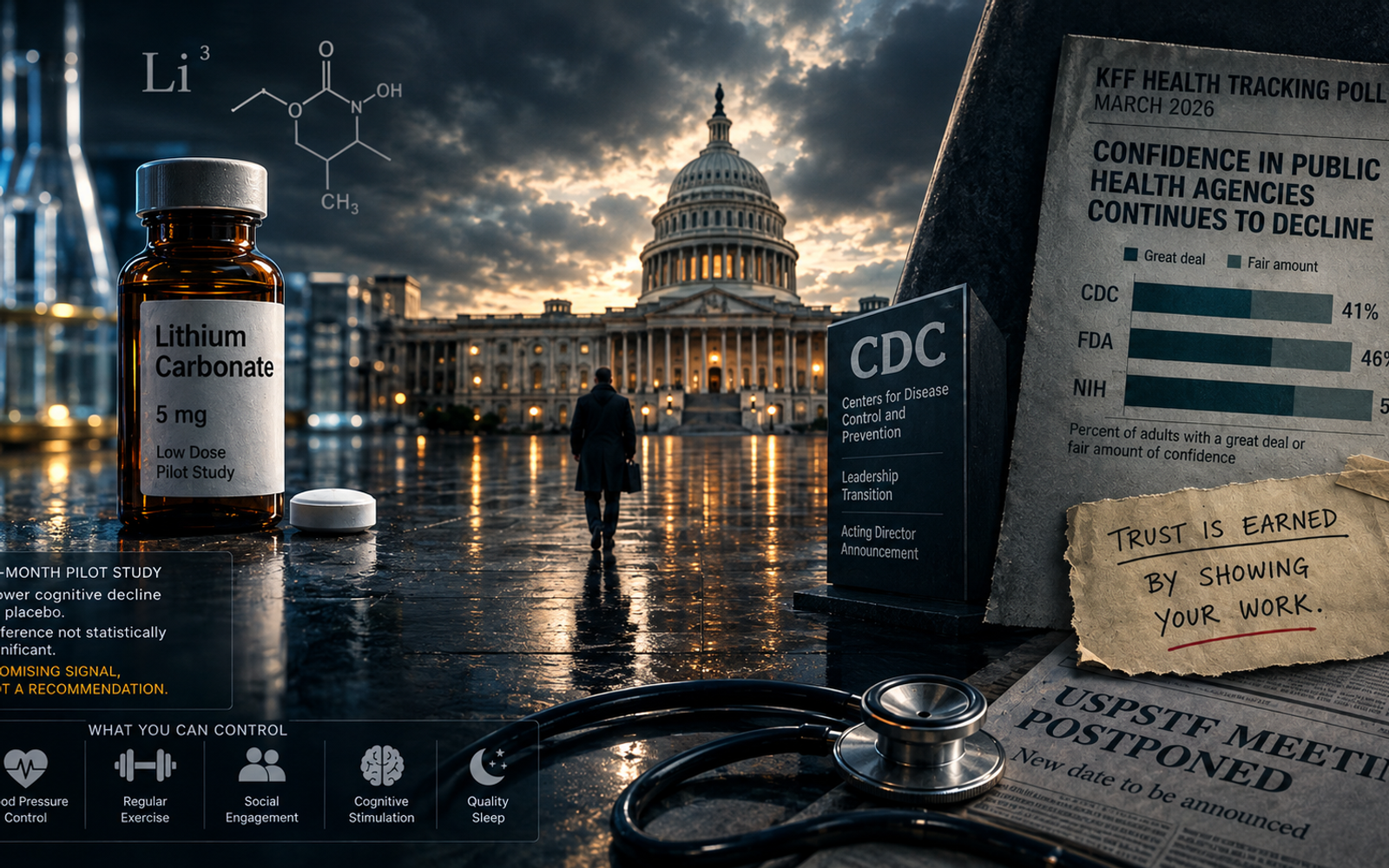
Wearable Tech Walks the RunwayLast week, MedPage Today reported on a pilot study from the LAT research group that tested daily low-dose lithium carbonate in older adults at risk for cognitive decline. The results were promising but not definitive. The study measured cognitive trajectories over 12 months using standard assessments, and the lithium group showed a slower rate of decline compared to placebo. But the difference didn't reach statistical significance. That's the part that matters. A signal, yes, but not a green light. The researchers called it a "promising signal," which is clinical trial speak for "we need more data before you should ask your doctor about this." Don't run out for lithium supplements just yet. Over-the-counter lithium is not the same as prescription-grade lithium carbonate, and the dosing in this study was carefully monitored with regular blood tests. You can't replicate that with a bottle from a health food store. The study itself is a good example of how early-phase research works: you look for a hint of benefit, you check for safety, and you design a bigger trial. That's where we are. A hint. Not a cure. Not even a recommendation.
Meanwhile, the CDC got a new acting director. Dr. Jay Bhattacharya, who already serves as NIH Director, was appointed to the role while keeping his current position. That's unusual. It's also worth watching. The CDC has been through a lot in recent years, and leadership transitions matter for how public health guidance reaches you. The announcement came quietly, without much fanfare, and without a clear timeline for when a permanent director would be named. You might wonder what this means for the CDC's independence. I wonder too. The agency's credibility depends on its ability to speak science without political interference, and a dual-hatted director raises questions about bandwidth and focus. The USPSTF meeting originally scheduled for this period was also postponed. No new date has been announced. That matters because the USPSTF sets screening guidelines that affect your insurance coverage and your doctor's recommendations. When meetings get postponed, decisions get delayed, and you're left waiting for guidance on things like cancer screenings and preventive care.
Let's talk about trust, because that's the thread running through all of this. The KFF Health Tracking Poll for March 2026, fielded from February 24 to March 2, asked people about where they get health information and who they trust. The results are sobering. Trust in public health agencies has continued to erode, with only about four in ten adults saying they have a great deal or fair amount of confidence in the CDC. That's down from earlier in the decade. Trust in the FDA is slightly higher but still fragile. Where do people turn instead? Their personal doctors, for one. And the internet, which is a mixed blessing. You're reading this, so you're already someone who seeks out information. But the KFF data shows that people who rely on social media for health news are more likely to encounter misinformation. That's not a judgment, it's a pattern. You can see it play out in real time with the lithium story if you search for it online. Some outlets are already calling it a breakthrough. It's not. A breakthrough would be a large randomized trial with clear results. This is a pilot study with a promising signal. The difference matters for your health decisions.
I wrote about this tension last month when talking about the ovarian cancer drug that made headlines for offering patients more time and better quality of life. That drug, a PARP inhibitor, was tested in a large phase 3 trial with survival endpoints. The benefit was real, and the side effect profile was manageable. That's a breakthrough. The lithium study is a step toward a breakthrough, maybe, but it's not there yet. You deserve to know the difference.
So what do you do with all of this? Here's the practical part. First, if you're concerned about cognitive decline, talk to your doctor about the things that have stronger evidence: blood pressure control, regular exercise, social engagement. The strength training study making the rounds this week found that two hours of resistance training per week was associated with a lower risk of early death. That's a modifiable factor you can actually act on. Second, pay attention to who is making health policy and whether they have the bandwidth to do the job well. The CDC and NIH need leaders who can give full attention to the work. Third, be skeptical of headlines that promise too much. The low-dose lithium story is worth following, but it's not worth changing your behavior over. Not yet. And fourth, check your sources. The KFF poll shows that trust is earned by showing your work. That's what I try to do here. No hype, no shortcuts, just the data and what it means for you.
The week of March 2, 2026, gave us a lot to process. A drug that might help but hasn't proven it yet. A leadership change that needs watching. A poll that reminds us how fragile public trust really is. You can hold all of that at once. It's not contradictory. It's just complicated. And health is always complicated.
Comments (0)
No comments yet. Be the first to share your thoughts.