Oil's 25% Plunge Rewrites the Playbook for Q2 Earnings
Crude fell a quarter of its value in a month. Chip stocks surged. Here's what the Iran deal realignment means for markets this week.

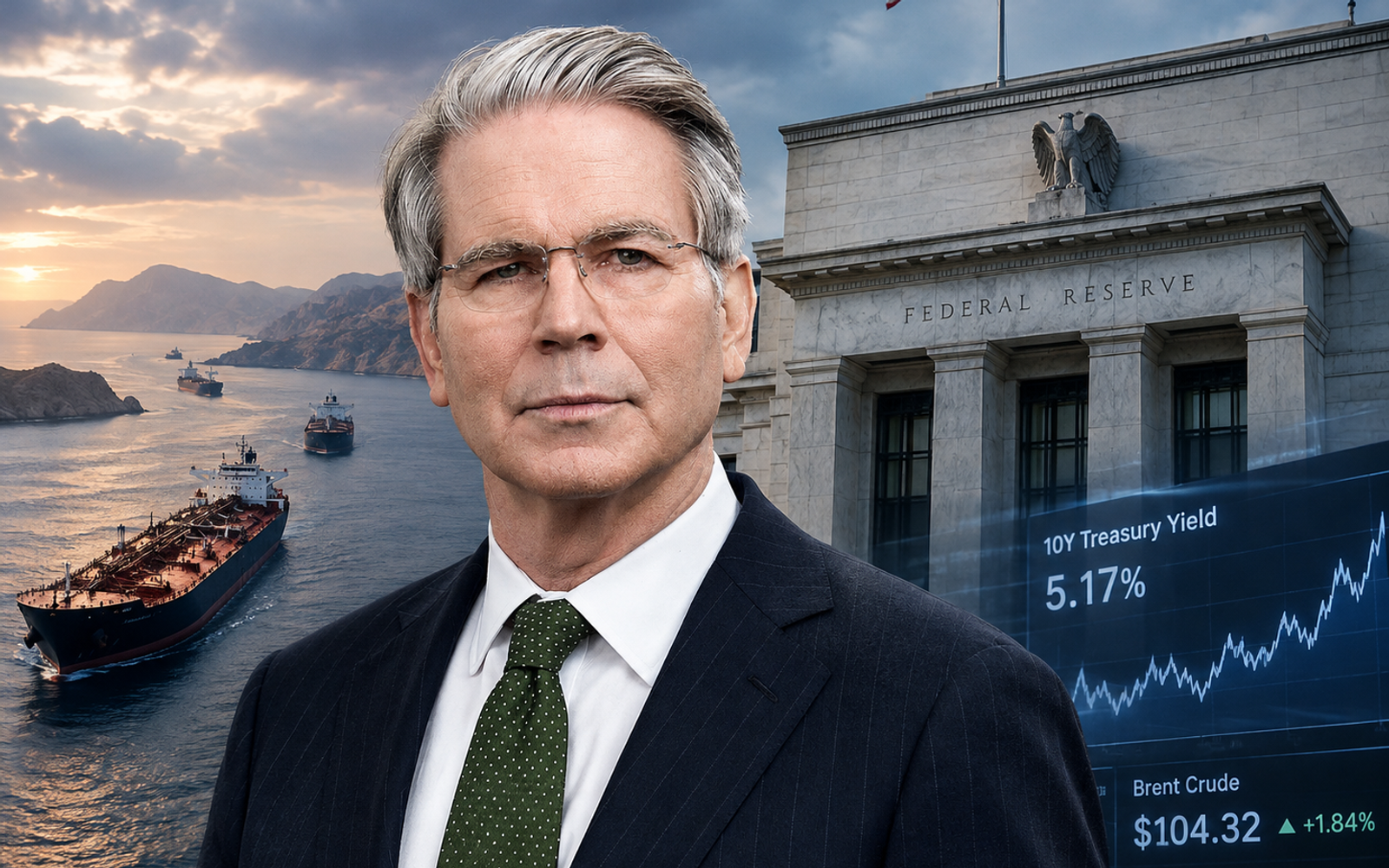
The tankers idling off the coast of Kharg Island tell a story that market data is only now catching up with. For weeks, the Strait of Hormuz functioned less as a shipping lane and more as a bargaining chip. Then the U.S. and Iran sat down. Again. And suddenly, the entire risk calculus of global energy markets inverted. Crude oil closed last week at $68.28 a barrel, down 25.21% over the past month, according to Trading Economics data. That is not a correction. That is a structural repricing.
What makes this week consequential is not just the scale of the move. It's what happens next. The Q2 earnings season opens July 9 with PepsiCo's report, and the macro backdrop has shifted so violently that sector rotation is no longer a trade, it's a survival mechanism. Chip stocks are ripping higher on AI infrastructure demand. Energy equities are getting hammered. The old hedge of "buy oil on geopolitics" just stopped working.
The Deal That Changed the Calculus
The resumption of U.S.-Iran nuclear talks, reported by multiple outlets on July 6, didn't happen in a vacuum. It followed weeks of back-channel negotiations that culminated in what Bloomberg described as a "preliminary peace agreement" in mid-June. The market reaction was immediate and violent. The Dow Jones Industrial Average surged 900 points on June 10 alone, per CNBC's live coverage, as investors priced out the tail risk of a broader Middle Eastern conflict.
But the oil move tells a different story. This wasn't a geopolitical risk premium being removed. It was a supply-side transformation.
Iranian crude, locked out of formal markets by sanctions for years, now has a path back. The International Energy Agency's estimates suggest Iran holds roughly 1.5 million barrels per day of spare capacity. Even a partial return would tip a global market already wobbling under the weight of oversupply.
Saudi Arabia knew this was coming. Aramco's official selling prices for July deliveries, released in mid-June, cut the premium for Arab Light crude to Asia by $6 a barrel, according to Maaal's reporting. That is not a market signal. That is a preemptive strike. Riyadh saw the writing on the wall and moved to defend market share before Tehran could undercut it.
Oil's 25% Plunge and What Broke
The numbers are brutal for anyone long crude. A barrel of West Texas Intermediate now costs roughly what it did in late 2021, before the Ukraine invasion rewrote the energy playbook. Over the past month, the commodity has shed a quarter of its value. The scale dwarfs anything in recent memory outside the COVID crash of 2020.
Three forces converged to create this. First, the Iran deal removed the geopolitical bid that had kept a floor under prices since April. Second, OPEC+'s production increases between April and December added 2.9 million barrels per day of global supply, per Yahoo Finance data, as Saudi Arabia prioritized volume over price. Third, demand signals from China remain tepid. The consumer recovery that bulls bet on has not materialized with any conviction.
The BBC reported that one oil industry source estimated it would take "a month or 45 days" to return to normal pumping balances after sanctions lift. Markets are pricing that in now. The front-month Brent contract is trading in contango, signaling that traders expect further weakness before any recovery.
AI Chip Stocks Rally While the Ground Shifts
Meanwhile, the other side of the trade is on fire. Semiconductor stocks have staged a rally that looks almost reckless against the macro gloom. Marvell Technology climbed 11.1% in a single session last week, according to AP News, part of a broader AI chip resurgence that has propelled the Philadelphia Semiconductor Index into bull market territory.
What's driving this is not a mystery. The AI infrastructure buildout continues to accelerate.
Data center capital expenditure among the hyperscalers, Microsoft, Amazon, Google, Meta, is running at levels that would have seemed absurd two years ago. Nvidia's guidance updates have consistently surprised to the upside. The company raised its full-year revenue forecast to roughly $167 billion, per Bloomberg, up 20% from an earlier guide of $140 billion.
But there is a tension here that the rally obscures. These valuations are pricing in perfection. The PHLX Semiconductor Index trades at roughly 28 times forward earnings, a multiple that leaves no room for execution errors. And the macro environment is getting more hostile, not less. Lower oil prices are disinflationary in the short term, but they also signal weakening global demand. Tech companies that depend on enterprise spending may find the second half of 2026 more challenging than the first.
What the JSE and African Markets Are Telling Us
The rotation is not confined to Wall Street. Johannesburg's JSE All Share Index declined 0.35% in recent trading, per exchange data, with energy-heavy names dragging the benchmark lower. Sasol Limited, the integrated chemicals and energy group which had gained 34.4% year-to-date per Businessfront's tracking of African equities, has come under pressure as crude slides. When your largest constituents are miners and energy producers, a 25% oil rout is not a rotation. It's a rewrite.
But the story across African exchanges is more nuanced than the headline index suggests.
The Nairobi Securities Exchange is preparing for the listing of Family Bank on June 23, a signal that local capital markets are still functioning despite the global turmoil. The Ghana Stock Exchange, meanwhile, has seen rotational flows into consumer staples and financials as investors reposition away from commodity exposure.
What connects these markets is a common thread: the search for yield in an environment where the old certainties have dissolved. The Iran deal did not create this dynamic. It accelerated a shift that was already underway, as investors rotated out of geopolitical risk premia and into stories backed by actual demand.
The Rotation Nobody Is Naming
The "Great Rotation" into value and cyclicals that dominated the first half of 2026 is showing signs of exhaustion. CNBC reported on July 1 that "the 'Great Rotation' trade persists into the third quarter" but noted that inflows are narrowing to the "blue boring names of the Dow Jones Industrials" as profit-taking hits the mega-cap tech names.
That is a subtle but important shift.
If the rotation is broadening beyond AI and energy into defensive sectors, it suggests institutional investors are hedging their bets. They want exposure to the AI theme, the Nvidia and SpaceX stories are too big to ignore, but they're layering in protection against a Q2 earnings season that could disappoint.
SpaceX's IPO, which unlocked roughly $2 trillion in market value per NovaRift's analysis, has created a gravitational pull that is sucking capital out of adjacent sectors. The ripple effects are showing up in unexpected places. Even cryptocurrency markets, which often trade independently of equities, are reacting. Bitcoin recovered from Strategy's BTC sale last week, with funding rates hitting 9%, per Cointelegraph data. The correlation between risk assets is tightening, not loosening.
Q2 Earnings: The Real Test Begins This Week
PepsiCo reports Thursday. PepsiCo is a bellwether for consumer demand. But the company also has significant exposure to input costs, including transportation and packaging. Lower oil prices help its margin profile, but a weakening consumer, signaled by the demand softness that drove crude lower, could offset those gains.
Listen to the Q2 earnings calls for guidance on the second half. That is where the real battle will be fought. The consensus S&P 500 earnings growth estimate for Q2 is roughly 8%, per Fidelity's midyear outlook, with operating margins at an all-time high of approximately 16%. Those are strong numbers. But they are backward-looking. The forward guidance will determine whether this week's rally has legs.
Companies that have pricing power and low commodity sensitivity are likely to outperform. Think technology platforms, not drillers. Think AI infrastructure, not refinery stocks. The last bastion for companies with no intrinsic pricing power, relying on a rising tide of inflation to float their revenue, is gone.
The Liquidity Drain Nobody's Watching
There is a structural factor beneath all of this that receives far less attention than it deserves. The Fed's balance sheet runoff, though paused in its most aggressive phase, has drained approximately $2 trillion of reserves from the banking system since 2022. That liquidity contraction is showing up in market depth. Bid-ask spreads are wider. Volatility is stickier. The S&P 500 can move 2% in a session on news that would have generated a 0.5% reaction two years ago.
The Iran deal is a perfect example. The initial 900-point Dow surge on June 10 was followed by a 400-point pullback within 48 hours. The market is overreacting to every data point because there is less liquidity to absorb the noise. That creates opportunity for nimble traders and risk for anyone holding positions through binary events.
What the Next 12 Months Look Like
The confluence of falling oil, rising AI capex, and tightening liquidity creates a market environment that rewards specificity over breadth. Broad index exposure will deliver the average. But the dispersion between winners and losers is likely to widen.
Iranian crude returning to market is deflationary for energy prices and inflationary for risk appetite, at least in the short term. But the medium-term question is whether the global economy can generate enough demand to absorb that supply without slipping into a recession. The yield curve is flashing warning signs. The 2-year to 10-year spread has been inverted for 22 consecutive months, the longest stretch since the late 1970s.
For African markets, the implications are double-edged. Lower oil prices reduce import costs for net oil importers like Kenya, Ghana, and South Africa, easing foreign exchange pressure. But they also squeeze fiscal revenues for producers like Nigeria and Angola, which budgeted at $75 and $65 a barrel respectively. The JSE's energy weighting means it will continue to underperform until crude finds a floor. And nothing in the current data suggests that floor is near.
The talks are resuming. The tankers are moving. The algorithms are repricing. And somewhere in all that noise, a new market structure is being built. The trick is figuring out which parts of it will still be standing this time next year.
--- *Disclaimer: This article is for informational purposes only and does not constitute financial advice. Past performance is not indicative of future results. Consult a qualified financial advisor before making investment decisions.*
Comments (0)
No comments yet. Be the first to share your thoughts.