The World Cup's Empty Seats Tell a Bigger Story
Record attendance numbers hide a more complicated reality as the 2026 tournament enters the knockout stage.

The USMNT just beat Bosnia and Herzegovina 2-0 in Santa Clara. Christian Pulisic ran the pitch after the final whistle, arms raised, while 68,000 people in Levi's Stadium made the kind of noise that gets sold to broadcasters as proof of America's soccer awakening. And for that specific pocket of the Bay Area, on that specific Wednesday, it probably was.
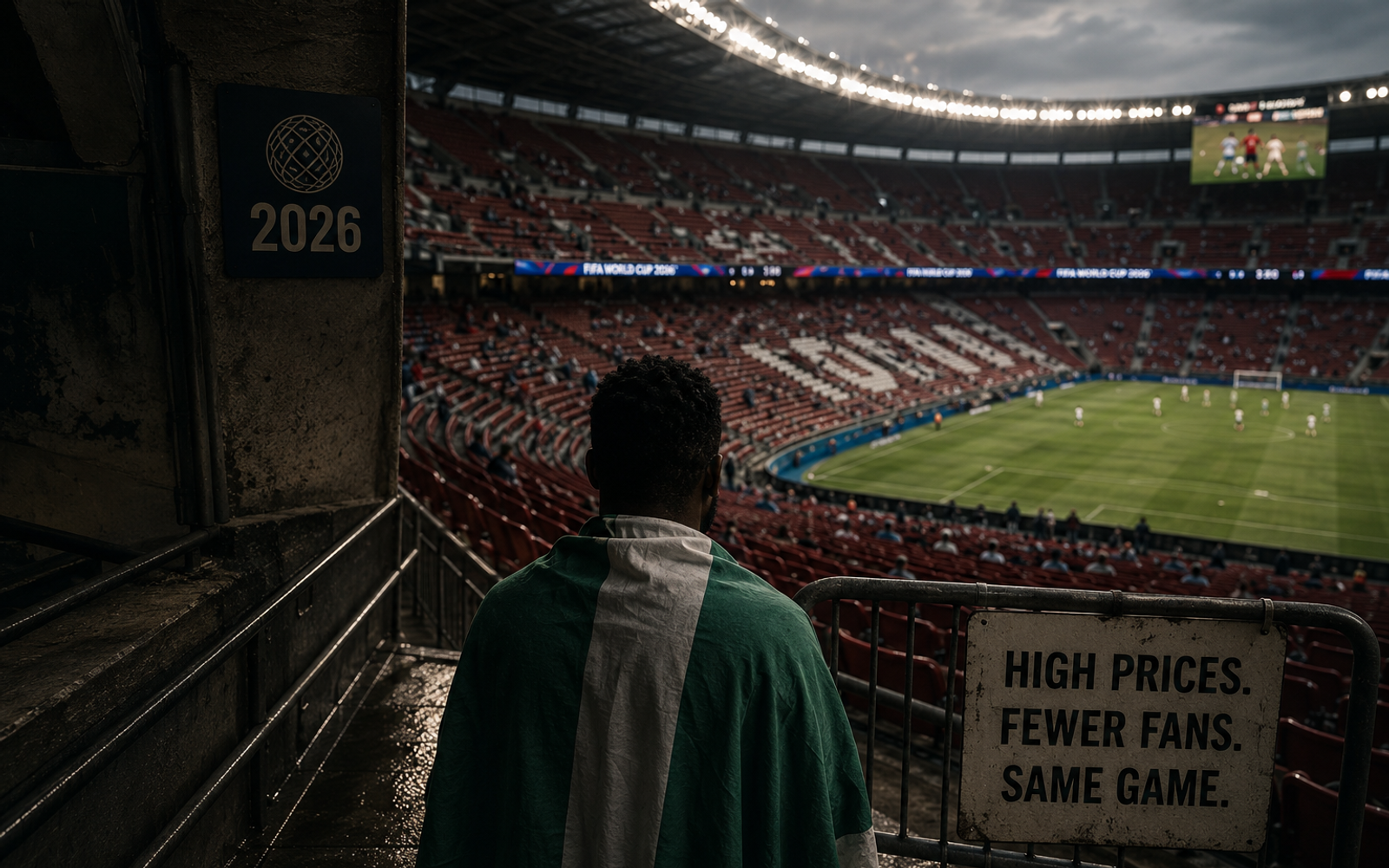
But here's the thing about this World Cup. The numbers look historic. The 2026 tournament is on track to break the all-time attendance record for a single edition, smashing the 3.5 million mark set by the 1994 World Cup also hosted in the United States. FIFA keeps pointing to those figures like they're a shield. According to reports from The Athletic, unprecedented demand for tickets was supposed to justify dynamic pricing that pushed single-match seats past $1,000 for the group stage. But then you look at the actual stands during Mexico vs. South Africa in Guadalajara, and whole sections look like someone Photoshopped the crowd out. The second game of the entire tournament had significant empty seats.
The Two World Cups
There is a tournament happening inside the stadiums, and a different one happening in the discourse around them. The on-pitch product has been genuinely compelling. Senegal, playing Belgium later today in Seattle, has looked sharp. Morocco, carrying the weight of their 2022 semifinal run and the hopes of an entire continent, advanced comfortably from their group. The expanded 48-team format, widely mocked when announced, has produced exactly what it was supposed to produce: more games that matter for more countries, more diaspora communities showing up in force.
But the other tournament is about hotels. About bonds. About who gets to be in the room. A New York Times report detailed that some international visitors were required to post $15,000 bonds just to enter the United States. The Trump administration's travel policies created a climate where fans from certain nations faced bureaucratic hurdles that made attending a month-long tournament feel like applying for a mortgage. This has consequences. Hotels in several host cities reported occupancy rates far below projections. In Dallas, in Vancouver, in Atlanta, the expected tourism boom has been more of a hum.
And still, FIFA insists the tickets are selling. The disconnect is not a glitch. It is the feature.
The African Question
For the continent that plays some of the most exciting football in the world, this World Cup was supposed to be a breakthrough moment. Morocco's run to the semifinals in 2022 proved that African teams could compete with anyone, not just as scrappy underdogs but as tactically sophisticated operators. Senegal arrived in North America with Sadio Mané still capable of the extraordinary, and with a generation of players who have been shaped by European academies but who carry a Senegalese football identity that is distinct, aggressive, and increasingly refined.
But the African story of 2026 is also about who is not here. Nigeria failed to qualify, a massive blow to the tournament's cultural footprint given that Nigerian diaspora communities in the U.S.
and Canada are among the most passionate football fanbases in the world. The Super Eagles' absence meant fewer watch parties in Houston, fewer jerseys in the stands at NRG Stadium, fewer moments where the global south sees itself reflected in the world's game.
This matters more than FIFA probably wants to admit. The World Cup's power has always been its claim to universality. When that universality gets filtered through $1,000 ticket prices and visa processes that discourage attendance, the product starts to feel less like a global celebration and more like a premium experience for those who can afford the travel, the accommodation, and the patience.
What America Actually Wants
Here is the uncomfortable question no one in the U.S. Soccer Federation wants to answer. Does America actually want to be a soccer nation? As earlier analysis at NovaRift explored, the country has a complicated relationship with hosting global events. The infrastructure exists. The enthusiasm on social media is substantial. But the cultural muscle memory for football as a communal ritual, the kind that empties streets in Dakar or Seoul or São Paulo, does not exist in the same way.
American sports fans are not uncaring. They are saturated. The NFL runs 18 weeks. The NBA and NHL overlap.
College football is a religion in half the country. Soccer is asking for attention in an ecosystem that has no room for another full-time commitment. The World Cup, as a concentrated six-week burst, can command that attention. But the question is whether the attention is deep or shallow. Whether it builds something lasting or just spikes for a month and then recedes.
The early evidence is mixed. Television ratings for group stage matches were strong but not exceptional. Streaming numbers were healthy. But the energy on the ground, measured not by ticket sales but by the texture of the experience, has been uneven. The empty seats are not just a pricing problem. They are a signal that the relationship between the event and the public is still being negotiated.
The Price of Admission
Dynamic pricing became the story of the group stage. FIFA, working with a secondary ticketing infrastructure that heavily favored algorithmic adjustment, watched as prices climbed in real time. A $175 ticket for Mexico vs. South Africa turned into a $600 ticket the moment demand registered above a certain threshold. Fans who planned their trips months in advance found themselves priced out of matches they had circled on their calendars. The backlash was immediate. The Guardian reported widespread frustration among traveling supporters who felt the tournament was being treated less as a cultural event and more as a revenue extraction exercise.
But here is the tension. The economics of a 48-team, 104-match World Cup across three countries are genuinely staggering. Hosting costs are enormous. Security logistics alone consume budgets that would fund entire domestic leagues. FIFA argues that dynamic pricing is necessary to match supply with demand in a tournament where every match is different. Critics argue it transforms a global festival into a luxury good.
The truth lives somewhere in the middle, but the middle is not where the anger lives.
The Long View
Senegal plays Belgium in about an hour. The USMNT advances to face their Round of 16 opponent. Some stadiums will be full. Some will not. The tournament will continue its relentless march toward the final at MetLife Stadium on July 19, where a new world champion will be crowned. The narratives will be written, the highlights will loop, and the official attendance record will be announced as a triumph.
And somewhere in a hotel lobby in Guadalajara, or on a train platform in Toronto, or in an airport lounge in Los Angeles, a fan who came from Accra or Nairobi or Johannesburg will wonder whether the World Cup they grew up dreaming about is the same World Cup that just arrived in North America.
The answer is not yet clear. But the question itself is the story this tournament is really telling.
Comments (0)
No comments yet. Be the first to share your thoughts.