What Your 2026 Health Will Actually Look Like
Forget the hype. Here's what the data says about the trends that will shape your care this year.

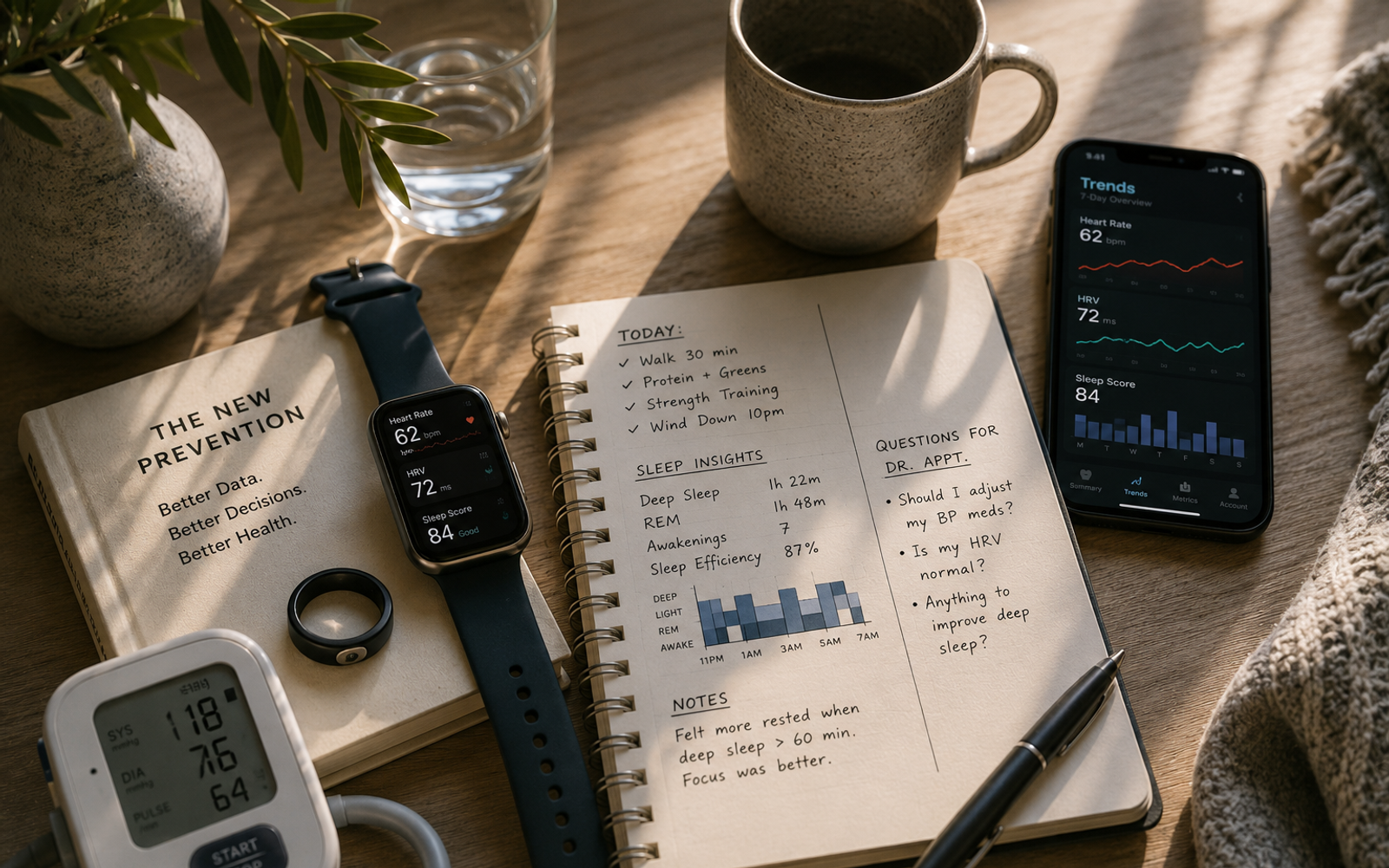
Last month, a 72-year-old woman walked into my colleague's clinic with a wearable she'd bought on sale at Target. It tracked her heart rate, sleep, and blood oxygen. She wasn't sick. She just wanted to know if the numbers meant anything. The answer, in 2026, is more complicated than yes or no.
You've seen the headlines. Telemedicine is here to stay. Nurse practitioners are taking on bigger roles. Wearables are everywhere. Cognitive wellness is the new fitness. But what does any of this actually mean for you? Not for the industry, not for investors, but for the person trying to decide whether to upgrade their smart ring or book a physical.
Let's start with the trend that quietly matters most: the shift toward care that fits your life instead of the other way around. The American Association of Nurse Practitioners put it plainly earlier this year. "Patients are increasingly looking for care that fits their lives, supports long-term health and reflects their individual needs," said AANP President Valerie Fuller. That sounds like a platitude until you realize what it requires. It requires a healthcare system that doesn't assume you can take a Tuesday afternoon off work. It requires clinicians who can prescribe, diagnose, and manage chronic conditions without a supervising physician signing off on every refill. And it requires technology that doesn't add friction.
A 2025 study in Health Affairs found that patients in states with full practice authority for nurse practitioners had 17 percent fewer emergency department visits for ambulatory care sensitive conditions compared to states with restricted scope of practice. That's not a small number. That's thousands of people who didn't sit in an ER waiting room for eight hours because they saw a NP the same day. The study controlled for insurance status, rurality, and comorbidities. The effect held.
Meanwhile, the devices on your wrist and nightstand are generating data that could change how we think about prevention. The Prenuvo blog recently highlighted cognitive wellness as one of the exploding health trends for 2026, noting that advances in this space could unlock $26 trillion in global economic value by 2040. That's a lot of money. But here's what matters more: the same article pointed out that wearables can now track sleep architecture, not just total hours. They measure heart rate variability, respiratory rate, and the time you spend in deep versus REM sleep. That matters because fragmented sleep is now linked to amyloid beta accumulation in the brain, years before any cognitive symptoms appear. A 2024 study in Neurology measured sleep fragmentation in 682 participants over six years and found that those with the highest fragmentation scores had a 1.5 times greater risk of developing mild cognitive impairment. Your smart ring isn't just telling you that you slept poorly. It's telling you something about your brain's future.
But let's be honest about what the data doesn't say. It doesn't say that buying a $300 wearable will prevent Alzheimer's. It doesn't say that tracking your sleep will fix it. What the data says is that the signal is real, and that ignoring it is a missed opportunity. The question is what you do with the information. That's where the next trend comes in.
Telemedicine in 2026 is not what it was in 2020. Back then, it was a patch. Now it's a pipeline. Remote monitoring has matured to the point where a patient with heart failure can be managed at home with a Bluetooth scale, a blood pressure cuff, and a weekly video visit. A 2025 randomized controlled trial in the Journal of the American College of Cardiology followed 1,200 patients with heart failure for 18 months. Half got usual care. Half got home monitoring with a nurse practitioner who reviewed their data daily. The monitored group had 38 percent fewer hospitalizations. Not readmissions. Hospitalizations. That's the difference between staying home and spending a week in the hospital. The cost savings per patient were roughly $4,200 over the study period. The quality of life scores were significantly higher.
None of this works if the technology feels like a chore. The devices that succeed are the ones you forget you're wearing. The systems that succeed are the ones that don't make you log into three different portals to see your own lab results. That's the design challenge that will determine whether 2026 trends become permanent fixtures or fade into the background.
There's another trend that's harder to quantify but impossible to ignore. The AMA Morning Rounds from early March reported on a study about GLP-1 drugs and weight loss maintenance. Patients who had reached their goal weight and hit a plateau were reducing their doses, not stopping altogether. The study, published in JAMA Internal Medicine this year, followed 200 patients who had lost at least 15 percent of their body weight on semaglutide. After a plateau, they tapered to a lower maintenance dose. Most kept the weight off for six months. That's not a cure. That's a management strategy. It's also a sign that we're finally treating obesity as a chronic condition, not a willpower failure.
What this all adds up to is a healthcare landscape that is more fragmented, more personalized, and more patient driven than anything we've seen before. That's good and bad. It's good because you have more options. It's bad because you have to navigate them yourself. No one is coming to coordinate your care unless you pay for concierge services or live in a system that has already integrated these tools.
So here's what I'd do if I were you. First, figure out what your wearable is actually measuring and whether it's validated for that purpose. A 2023 study in the Journal of Medical Internet Research tested 10 consumer wearables against polysomnography. Only three had acceptable accuracy for sleep staging. The others were basically fancy pedometers. Check the validation studies before you trust the numbers. Second, if you have a chronic condition, ask your provider whether remote monitoring is an option. Many insurance plans now cover it, but they won't offer it unless you ask. Third, pay attention to your sleep architecture, not just your sleep duration. If your wearable shows consistently low deep sleep or high fragmentation, mention it to your doctor. It might be nothing. It might be the first signal of something worth catching early.
The trends for 2026 are not about miracles. They're about increments. Better monitoring. Earlier signals. More autonomy. Less waiting. That's not a revolution. It's a slow, uneven improvement that only helps if you know how to use it. The woman with the Target wearable is back in three months for a follow-up. She brought a notebook with her sleep data and a list of questions. She's not an expert. She's just paying attention. That might be the most important trend of all.
Comments (0)
No comments yet. Be the first to share your thoughts.