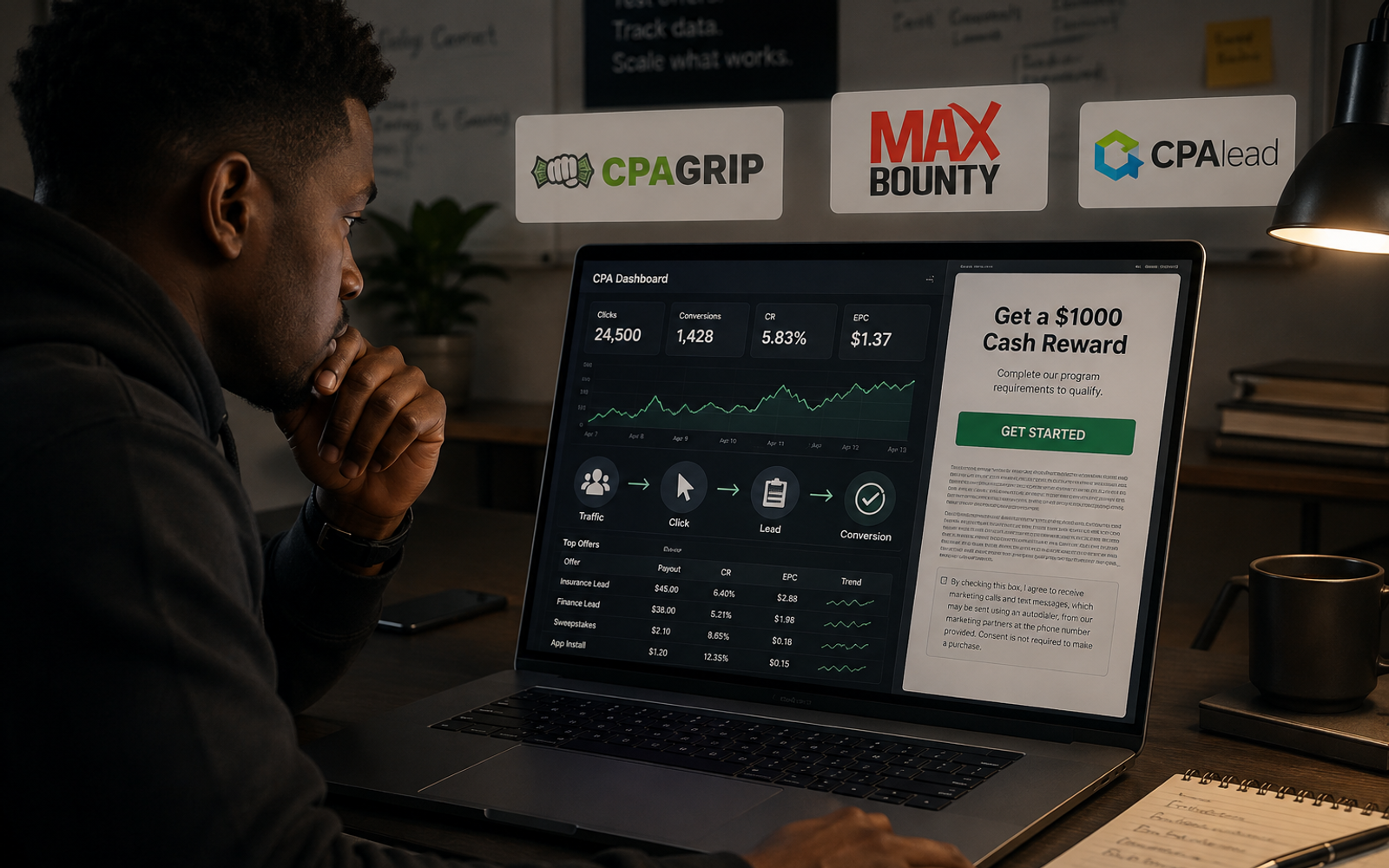
How CPA Marketing Works (And Where Beginners Go Wrong)
CPA marketing is often sold as effortless income, but the offers and networks behind it range from legitimate to predatory. Here's how the model works and which beginner-friendly networks actually hold up.

CPA marketing gets pitched online as a low-effort way to earn money by simply "sending traffic." In practice, it is a performance advertising model with its own mechanics, its own jargon, and a wide quality range between both individual offers and the networks that host them. Some CPA offers are genuinely useful for both advertiser and consumer. Others are built almost entirely around getting a click and a form submission, with little regard for what happens to the person after they submit it. Understanding the difference, and knowing which networks are worth your time, is the actual skill in this space, more than any traffic technique.
What Is CPA Marketing?
CPA stands for cost per action. An advertiser agrees to pay a fixed amount every time a specific action is completed, rather than paying for a full sale. That action might be as simple as submitting an email address, entering a zip code, installing an app, completing a short quiz, or filling out a lead form for a financial or insurance product.
This is different from cost-per-sale affiliate marketing, where a marketer only gets paid when someone actually buys something. CPA offers pay out earlier in the funnel, which is exactly why they are popular with beginners: the bar for a "conversion" is much lower than a completed purchase. It is also exactly why offer quality varies so much. A purchase requires real buyer intent. An email submission does not, which opens the door to offers designed purely to capture a click rather than deliver anything of real value.
There is also a spectrum within CPA itself. Cost per lead (CPL) pays for a qualifying form submission, cost per install (CPI) pays for a completed app install, and cost per view or cost per engagement pays for even lighter interactions like watching a video to completion. The lighter the required action, the lower the payout usually is, and generally the easier the offer is to promote.
How CPA Offers Actually Pay Out
Every offer has a payout figure attached to it, and networks track a few core metrics alongside it:
- Payout: the flat amount earned per completed action, ranging from under a dollar for simple email or zip submits to five dollars or more for financial and insurance leads.
- Conversion rate (CR): the percentage of clicks that actually complete the required action.
- EPC (earnings per click): payout multiplied by conversion rate, which is the number that actually tells you whether an offer is worth running, not the headline payout alone.
A $5.00 offer with a 1% conversion rate earns less per click than a $2.00 offer converting at 8%. New marketers frequently chase the biggest number in the payout column and ignore this, which is one of the fastest ways to burn traffic without earning anything.
Networks track all of this through a unique tracking link assigned to each affiliate, which routes the click through the network's tracking domain before landing on the offer page. That link is also how commission gets attributed back to whoever sent the traffic. Most networks also support sub-IDs, small tags appended to the tracking link that let a marketer see which specific traffic source, ad, or placement produced each conversion. Ignoring sub-IDs is a common early mistake, since without them there is no way to tell which part of a campaign is actually working.
Where Offers Come From
CPA offers are listed and managed through CPA networks, which sit between advertisers who want leads and marketers who want to promote something for a commission. Networks vary widely in how carefully they vet advertisers and offers. Some maintain strict compliance review and a manual application process. Others list almost anything an advertiser submits and grant instant approval, leaving it to the individual marketer to read the terms before promoting.
That second category is where most of the reputational risk lives, and it is worth treating every offer's terms and landing page as something to verify yourself before sending an audience to it, rather than assuming the network has already done that work.
Popular CPA Networks for Beginners, Ranked by Real Reviews
Plenty of "best CPA network" lists online are written or sponsored by the networks themselves. To keep this useful, the ranking below is based on independently sourced reviewer ratings rather than marketing copy, alongside how accessible each network actually is to someone with no track record.
| Rank | Network | Rating | Approval | Notes |
|---|---|---|---|---|
| 1 | MaxBounty | ~4.0 / 5 (Trustpilot, 230+ reviews) | Manual review, stricter | Since 2004. Reliable weekly payments, strong account managers. Main complaint: lead shaving disputes. |
| 2 | CPAlead | 3.8 / 5 (Trustpilot, 274 reviews) | Instant, no interview | $1 minimum payout, daily payments, easiest entry point. Main complaint: fraud filtering and lead-crediting disputes. |
| 3 | CPAGrip | ~3.1 / 5 (RatingFacts, 51 reviews) | Instant, no interview | No interview, large incentivized-offer library. Main complaints: account restrictions without explanation, one flagged phishing redirect. |
The pattern across all three is consistent with CPA marketing generally: the networks with the lowest barrier to entry (CPAlead, CPAGrip) are the easiest to start on, but also carry the most mixed reviews, while the network with tighter vetting (MaxBounty) rates higher on average but is harder to get approved for as a total beginner. A reasonable starting approach is applying to more than one at once rather than waiting on a single application, and treating the account manager's responsiveness in the first week as an early signal of what ongoing support will actually look like.
Beyond the overall star rating, a few specifics are worth checking before committing real traffic to any network, including the three above:
- Minimum payout threshold. A low minimum, like CPAlead's $1, means a beginner sees real payment proof faster, which is useful for confirming the network actually pays before scaling up.
- Payment methods and schedule. Weekly versus daily payments, and whether the network supports a payment method that's actually accessible, matters more once volume increases.
- How disputes get resolved. The recurring "lead shaving" and "account restricted without explanation" complaints across all three networks above are less about any single network being dishonest, and more about how clearly each one explains its own compliance decisions when something gets flagged. A network with a responsive account manager tends to resolve these faster than one relying purely on automated review.
The Offer Types You'll See
Offer categories look similar on paper, but the actual landing pages behind them tell a more useful story. Here are four real examples pulled from live CPA networks (CPAGrip, Affmine, and Nexussner), unedited.
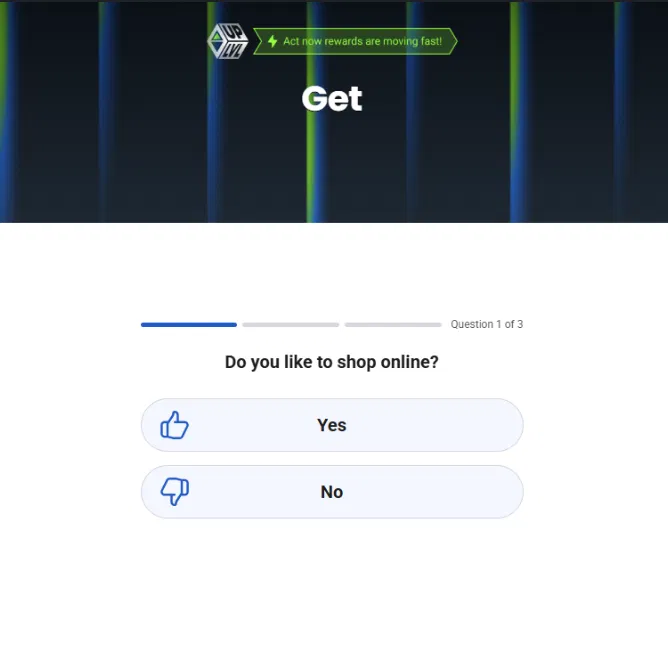
This offer opens with a low-friction question before ever asking for contact details. Quiz-style landers convert well because the first "ask" feels trivial, but they are usually front-loading a multi-step form. The real data capture happens two or three questions later. Worth checking how many steps actually sit behind question one before assuming the payout is easy to earn. (View Live Example)

"Pick your lucky number, one winner takes all" is designed to feel like an actual game of chance. There is no visible odds disclosure, no stated number of total entrants, and no rules link on the lander itself. Sweepstakes-style offers are also a category regulators watch closely for exactly this reason. Promoting one without confirming the advertiser discloses real odds somewhere in the funnel is a legal exposure for the marketer, not just a quality issue. (View Live Example)
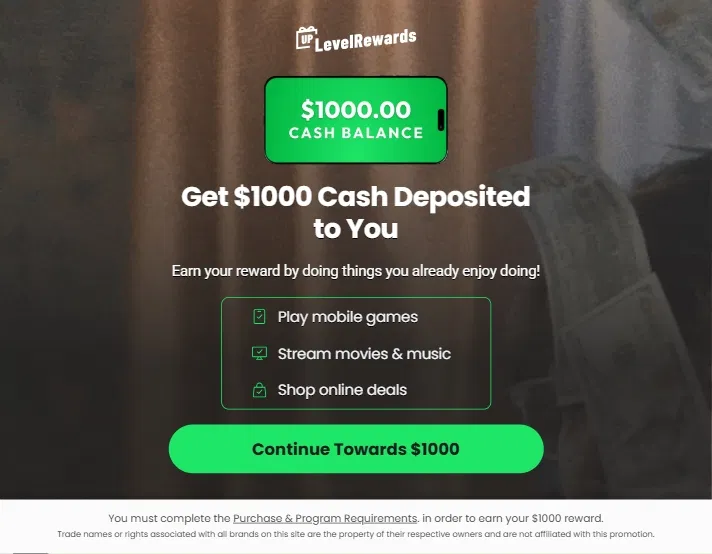
"Get $1000 Cash Deposited to You" reads like free money, but the fine print underneath the button says otherwise: "You must complete the Purchase & Program Requirements in order to earn your $1000 reward." That single line changes what this offer actually is. It is not a giveaway, it is a rewards portal that requires completing paid sign-ups or purchases before any cash is released. That is a legitimate incentive model as long as the requirement is clearly stated, which it is here, just not in the size-16 headline. (View Live Example)
Where Beginners Go Wrong
The single biggest mistake in CPA marketing is not a traffic mistake. It is promoting an offer without reading what happens after someone submits their information. This example makes the point clearly.
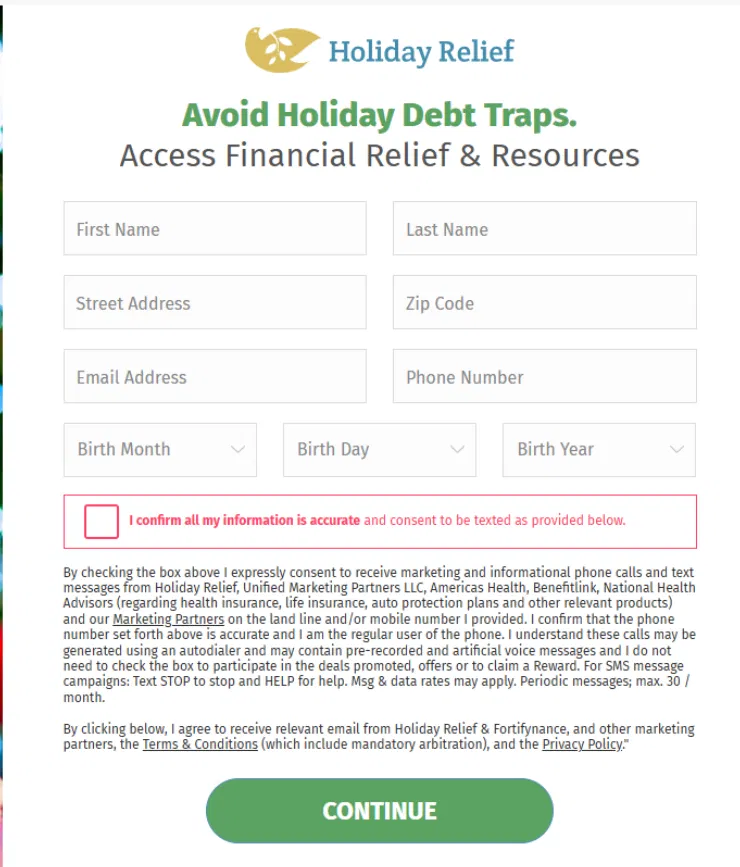
"Avoid Holiday Debt Traps" targets people who are already in financial stress, which puts it in one of the categories regulators scrutinize most closely. The consent text underneath the checkbox states that the visitor's number "may be generated using an autodialer and may contain pre-recorded and artificial voice messages," and separately says the visitor "does not need to check the box to participate." In practice, that means the visitor's contact information can be shared with a list of named marketing partners regardless of what they choose. Promoting an offer like this to an audience, without reading that clause first, means routing real people, often people already dealing with debt, into a system that discloses it may call and text them from an autodialer either way. That is the kind of detail that separates a defensible CPA campaign from one that generates complaints, chargebacks, or worse. (View Live Example)
Beyond consent language, the other recurring beginner mistakes are simpler:
- Ignoring device and geo restrictions. Offers are frequently locked to a specific country, and sometimes a specific device or operating system. Sending the wrong traffic to a geo-locked offer gets clicks rejected and can get an account flagged by the network.
- Chasing payout instead of EPC. A high headline payout with a low conversion rate almost always underperforms a modest payout with a strong conversion rate.
- Skipping the network's compliance rules. Most networks restrict how an offer can be represented, for example banning language that implies a guaranteed prize. Violating that gets offers pulled and accounts suspended.
- Judging a network only by its approval speed. As the ranking above shows, the networks that approve anyone instantly also tend to carry more mixed reviews than the ones with a real vetting process. Fast approval is convenient, not a quality signal on its own.
- No disclosure to their own audience. If a link earns commission, saying so is not optional. It is a legal requirement in the US, and it is also what keeps an audience trusting a source over time.
What Actually Converts
Setting the compliance issues aside, the offers that perform well long-term tend to share three traits:
- Audience match. An offer relevant to why someone is already reading converts far better than a generic high-payout offer dropped into unrelated content.
- Landing page clarity. Offers that state their real requirement early, even in fine print, tend to have fewer rejected leads and fewer refunded conversions than offers that bury it.
- Traffic source alignment. An offer that performs on social traffic often performs differently on search or email traffic. Testing small before committing real budget or a real audience matters more than the offer itself.
It is also worth tracking performance by network, not just by offer. Two networks running functionally similar offers can produce very different results once lead crediting, dispute handling, and payment reliability are factored in, which is exactly what separates the reviewer sentiment behind the rankings above.
Getting Started the Right Way
- Apply to more than one network at once, rather than waiting on a single application before starting, since approval timelines and outcomes vary.
- Read every offer's terms and landing page yourself before sending any traffic to it, including the fine print under the button.
- Track EPC and conversion rate, not just the payout figure, before deciding an offer is worth running.
- Use sub-IDs from the start so it is possible to tell which traffic source or placement is actually converting.
- Disclose affiliate relationships clearly to your own audience, near the link itself, not buried in a separate page.
- Start with a small test on a limited budget or a limited slice of an audience before scaling anything up.
Frequently Asked Questions
What does CPA stand for in marketing?
CPA stands for cost per action. It is a performance advertising model where an advertiser pays a fixed amount each time someone completes a specific action, such as submitting an email address or filling out a lead form.
Is CPA marketing legal?
Yes, CPA marketing itself is a legal, widely used advertising model. Individual offers can cross into legal risk if they misrepresent odds, bundle consent in a misleading way, or target vulnerable audiences without proper disclosure, which is why reviewing each offer's terms matters.
How much can beginners realistically earn?
Earnings depend entirely on offer quality, network reliability, traffic source, and conversion rate rather than any fixed number. Marketers who chase the highest payout figures without checking conversion rate or audience fit typically earn far less than the payout column suggests.
What is the difference between CPA and CPS marketing?
CPA pays for a completed action, such as a lead form or app install. CPS, cost per sale, only pays when a purchase is actually completed. CPA offers convert more easily but generally pay less per conversion than a completed sale.
Which CPA network is best for a total beginner?
CPAlead and CPAGrip both offer instant approval with no interview, which makes them the easiest starting point. MaxBounty rates higher on average reviewer sentiment but requires a manual application, so a common approach is applying to CPAlead or CPAGrip first while a MaxBounty application is pending.
Comments (0)
No comments yet. Be the first to share your thoughts.