$50 Billion Back to Shareholders. Smart?
JPMorgan's record buyback and Goldman's dividend raise look like strength. The numbers tell a different story.

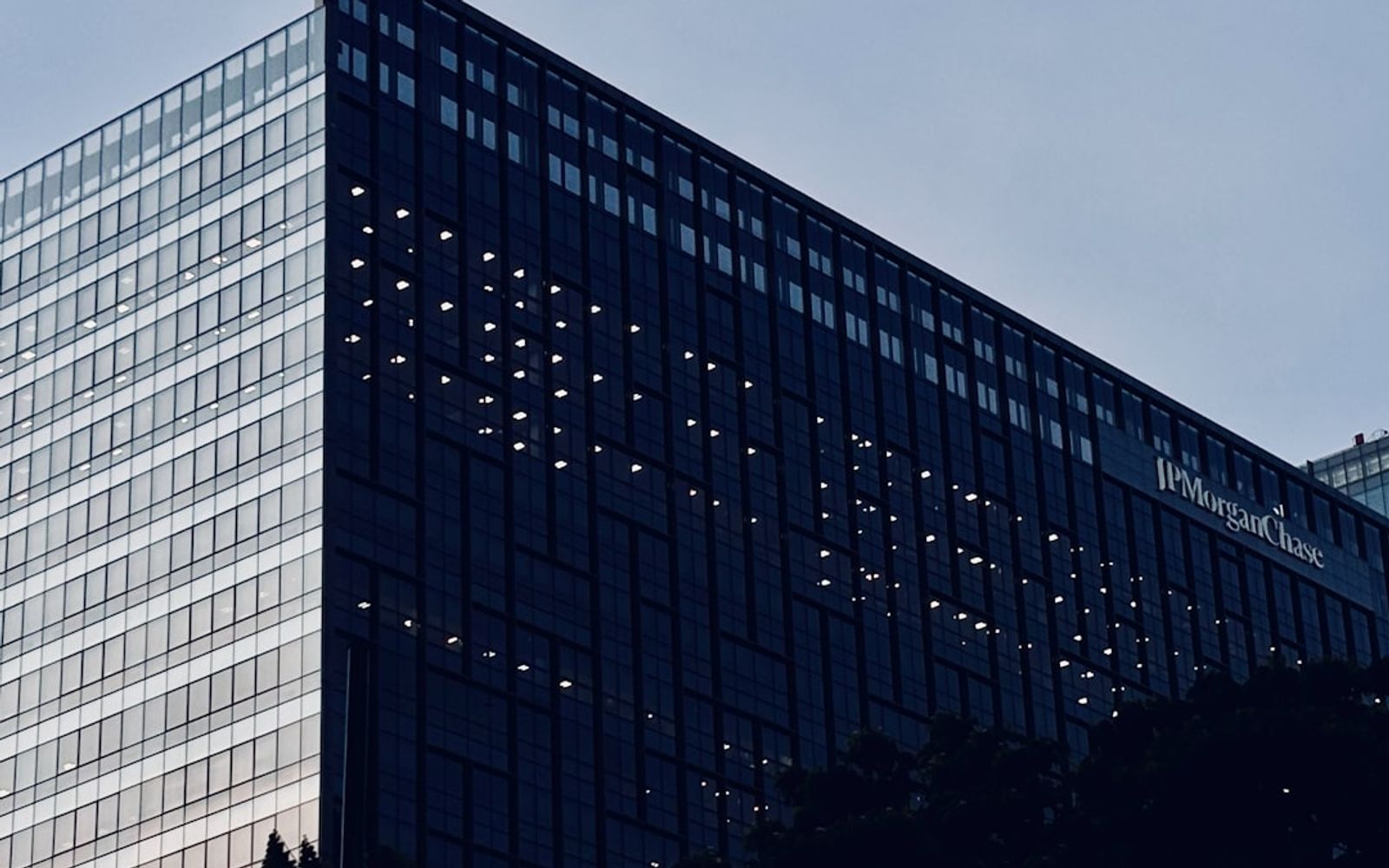
The press release hit at 8:17 AM. JPMorgan Chase would buy back $50 billion of its own stock. Raise the dividend 10%, from $1.50 to $1.65 per share. Goldman Sachs followed within hours, bumping its dividend from $4.50 to $5.00, an 11% jump. CNBC
The market cheered. Of course it did. Share buybacks and dividend hikes are the twin signals of corporate vitality, the double tap that says "we have plenty of capital and we trust our future earnings."
But the math is worth holding up to the light.
The Fed Giveth, and the Fed...
These announcements landed right after the Federal Reserve's annual stress test. Both banks passed with room to spare. JPMorgan's capital ratios stayed thick. Goldman's stress capital buffer held at 3.4%. The Fed gave the green light for capital returns. Goldman Sachs
That much is straightforward.
What sticks is the timing. The Fed's next rate decision lands in late July. The European Union is staring down Trump's threatened 100% tariff on European goods over a digital services tax dispute. Commercial real estate loans, a known weight on regional banks, still have not repriced fully through the system. BBC
This is the context in which JPMorgan decided to hand $50 billion back to shareholders.
A $50 billion number tends to silence doubt. The proper question is not whether JPMorgan can afford the buyback. It is whether this is the best use of that capital right now.
The Opportunity Cost That Nobody Priced
JPMorgan ended Q1 2026 with roughly $1.7 trillion in assets. A $50 billion buyback represents about 3% of that base. Not a dent. But buybacks are not neutral. They are a bet that the stock is undervalued relative to future earnings.
Trading around $220 per share, JPMorgan carries a price-to-book ratio above 1.8x. Historically, banks that buy back stock at elevated multiples leave less room for error.
If earnings compress and the stock falls, the buyback capital is gone. It cannot be redeployed into loans, acquisitions, or reserve buffers.
Goldman's dividend increase is smaller in absolute terms but tells a similar story. The bank raised its payout by 11% even as its return on equity hovers around 13%. A dividend hike locks in a recurring cash obligation. That money cannot chase growth if the deal market stays sluggish.
JPMorgan's Q1 2026 return on tangible common equity hit 23%. That is strong. But the buyback math works best when the stock's earnings yield exceeds the cost of equity. At $220 per share with annualized earnings per share around $23.76, the earnings yield lands at about 10.8%. JPMorgan's cost of equity sits somewhere between 9% and 11%. The buyback is roughly value neutral. Not a disaster. Not a home run either. A lot of execution risk for a marginal return.
What African Banks Do Instead
The comparison is instructive.
Access Bank, headquartered in Lagos and listed on the Nigerian Exchange (NGX), finished 2025 with a capital adequacy ratio of 22.1%, well above regulatory minimums. It did not announce a $50 billion buyback. Instead, it deployed capital into expansion, acquiring Kenyan lender Sidian Bank and pushing into Morocco and Egypt. The strategy targets revenue growth, not share count reduction.
Standard Bank, listed on the Johannesburg Stock Exchange (JSE), has leaned its excess capital into trade finance infrastructure across the continent. The bank set a target to mobilise over R450 billion in sustainable finance by 2028.
It is betting that the returns on physical and digital banking infrastructure in under-penetrated markets still beat the returns on a stock buyback. Standard Bank Group
Neither strategy is wrong. But they reveal different assumptions about what growth looks like.
JPMorgan is signaling that the US market is mature enough that returning capital beats reinvesting it. African banks are signaling the opposite: the market is still wide open, and the returns on branch and digital expansion across the continent still beat the returns on a stock buyback.
The contrast maps neatly onto a broader pattern. American financial institutions have spent the past decade consolidating and returning capital. Their African counterparts have spent the past decade expanding footprints, building cross-border payment rails, and absorbing smaller competitors. One approach contracts the equity base. The other expands the earnings base.
Tariffs, Stress Tests, and the Late Cycle
Trump's tariff threat against Europe complicates the picture further. A 100% tariff on European goods would hit supply chains in ways that feed back into corporate earnings, loan demand, and default rates. Banks make money when trade flows smooth. They lose it when friction spikes.
The stress test that cleared JPMorgan and Goldman for buybacks did not model a 100% tariff scenario. It modeled a severe recession. But tariffs are not a recession. They are a structural rewiring of trade patterns that produces isolated earnings shocks, not broad economic collapse. The difference matters. A tariff-induced earnings dip at a corporate borrower could push a loan into special mention territory. That would not crater the bank. But it would reduce the earnings cushion that justifies the buyback price.
Goldman's investment banking revenue, heavily tied to M&A and capital markets, is especially exposed to trade policy uncertainty. Deals freeze when tariffs escalate. CEOs do not sign acquisition papers when they cannot predict input costs. Goldman raised its dividend by 25% compared to a year ago. That locks in a higher cash outflow during a period when deal flow might slow.
The same uncertainty applies to JPMorgan's $50 billion authorization. The bank can slow purchases if conditions sour. But the psychological commitment is already made. Management told the market it expects to have $50 billion in excess cash. If that cash does not materialize because loan losses creep higher or trading revenue softens, the bank faces a credibility problem. Buyback announcements carry implicit promises. Breaking them spooks investors more than never announcing them.
The Spreadsheet Nobody Runs
The banking sector operates on trust more than any single metric. A recent analysis of brand dynamics in financial services found that reputation moves deposits faster than any pricing strategy. If the buyback is seen as mispriced, or if the dividend hike strains earnings during a tariff shock, the trust penalty compounds fast. Brand Boycotts: The Spreadsheet Nobody Runs
JPMorgan and Goldman have the balance sheets to ride out a bad call. That is not the risk. The risk is that executives who pile into buybacks at peak earnings and peak multiples are making the same mistake their predecessors made in 2007. The capital was there. The confidence was high. The macro was hiding cracks.
Dangote's refinery in Nigeria took a different approach to capital. It poured $20 billion into a single industrial bet, choosing asset creation over financial engineering. That bet looks increasingly smart as the Strait of Hormuz stays volatile and European refineries struggle. How Dangote's Refinery Beat the Strait of Hormuz The contrast is stark. One company builds physical capacity that generates cash for decades. Another buys its own shares at a marginal return.
$50 billion is a number that stops conversation. It should start one.
The banks passed the stress test. The capital ratios are fine. The dividends are rising. And the global trade system is facing its most serious disruption in decades. Those facts sit uncomfortably together. The buyback is not a mistake yet. But the margin for error just got thinner.
Comments (0)
No comments yet. Be the first to share your thoughts.