How to Build a Matchmaking Engine for Deal Flow
The venture industry spends decades digitising data without solving discovery and waste months chasing misaligned investors, while funds drown in irrelevant pitches.
 By Novarift Staff
The venture industry has spent two decades digitising almost everything except one of its most critical activities: identifying the right counterparty for a deal.
Founders have databases. Investors have databases. There are CRM systems, investor directories, pitch platforms, accelerator networks, and a growing body of AI-assisted research tools. Yet the basic process remains structurally unchanged. A founder builds a list, requests warm introductions, sends emails, waits, follows up, gets rejected by investors who were never a fit, and starts again. Investors experience the inverse: more inbound than they can reasonably evaluate, most of it irrelevant to their investment mandate.
The result is a structural inefficiency in an industry with more information than ever, but still not enough intelligent discovery.
The problem is not deal flow. It is deal matching.
The Difference Matters More Than It Sounds
In 2025, US venture firms closed 15,352 deals worth approximately $320 billion. At the same time, Carta reported that startups on its platform raised $119.5 billion, a 16.9% increase year over year, while the number of new funding rounds fell to 4,859, the lowest annual total in at least six years.
More capital is moving through the system while the number of transactions grows more concentrated. In a market where headline figures can conceal a narrowing distribution of actual deals, the cost of poor discovery rises. A founder who spends six months approaching investors outside their mandate is not suffering from a lack of information. They are suffering from a lack of relevant information.
That distinction points toward a specific infrastructure gap: not more data, but a smarter layer between the data.
What a Matchmaking Engine Actually Needs to Do
The obvious framing is algorithmic: build a platform that uses stated preferences on both sides to produce relevant suggestions. In theory, this is straightforward. In practice, the difficulty lies in what "relevant" means for a private transaction.
A search engine matches a query to a document. A matchmaking engine for capital needs to match intent on both sides, and intent in private markets is multi-dimensional, partially unstated, and changes over time.
For an investor, relevant criteria include sector, stage, ticket size, geography, ownership preference, thesis nuance, deployment timeline, and business model. For a founder, the variables include funding stage, amount required, investor type, strategic value beyond capital, and timeline.
Many of these are not binary filters. An investor focused on climate technology might draw sharp distinctions between energy infrastructure and consumer behaviour change. A founder open to family offices might have strong reservations about certain institutional structures. A matchmaking system that treats these as simple category filters will produce technically accurate but practically weak results.
The structural requirement is a richer representation of preference on each side, and a matching function that can compare those representations meaningfully. That shifts the fundamental user workflow from search → filter → investigate → contact to match → evaluate → express interest → connect. The difference sounds incremental. The economics of attention it unlocks are not.
Match Scores as Prioritisation Infrastructure
One of the more powerful applications of this model is the compatibility score: a signal telling an investor why a particular opportunity surfaces at the top of their queue.
The score is not a prediction of success. It cannot determine whether a company will become a billion-dollar business, and it should not try. What it can do is indicate whether a company's stated characteristics appear aligned with an investor's stated criteria, and rank opportunities accordingly.
Take three opportunities in an investor's queue: a 91% match, a 76% match, and a 48% match. The investor immediately knows where to allocate the first hour of attention. The 48% match may still be worth reviewing; the score is a prioritisation signal, not a gate. But it changes the cognitive load of the process substantially.
This is a realistic application of machine reasoning to private markets: not predicting outcomes, but improving what reaches the decision-maker's attention first.
The Founder Side of the Same Problem
Investors are not the only party absorbing disproportionate search costs.
A founder with a well-prepared deck still faces a fundamental distribution problem: who should actually see it? Identifying relevant investors individually, tailoring outreach, managing follow-up, and handling rejections from investors who were never a fit is a full-time activity running parallel to building a company.
A matchmaking model can partially reverse this burden. Rather than asking founders to continuously search for investors, the platform makes a founder's profile discoverable to investors whose criteria are already aligned. The founder stops hunting and starts being found.
This is the network effect that platform-side thinking makes possible. More relevant investors attract more serious founders. More high-quality founders make the platform worth the investor's time. Successful matches generate social proof that compounds. But this effect only materialises if matching quality is actually high, which returns to the hardest part of the product.
Data Quality Is Not a Feature. It Is the Foundation.
A matchmaking engine is precisely as useful as the information entering it.
If an investor claims to focus on climate technology but has made no such investment in four years, the algorithm will produce technically accurate but practically useless matches. If a founder provides incomplete information about their stage or capital raised, the system routes them to investors for whom they are not genuinely relevant. In both cases, the platform creates the appearance of efficiency while reproducing the same mismatch problem it was built to solve.
This means verification is not peripheral. It sits at the centre of the product. The platform needs to know whether an investor is actively deploying capital, whether their stated criteria are current, and whether a founder is genuinely in an active raise process rather than keeping options open.
The Carta data makes the stakes concrete. The decline in the number of funding rounds even as total capital increases suggests that qualifiable deal flow (opportunities that are actually investable by a specific investor at a specific moment) is the scarcest resource in the system, not raw volume. A platform that increases the number of profiles does not necessarily solve that problem. It needs to increase the probability of relevance on each side. Those are meaningfully different objectives.
After the Match: Where Most Platforms Still Fall Short
The architecture of the post-match experience determines whether a platform creates genuine efficiency or simply surfaces introductions that return to email and LinkedIn.
The ideal workflow keeps the transaction inside the product:
1. Discovery surfaces a relevant opportunity.
2. The investor sees why it matched their criteria.
3. They express interest.
4. The founder responds.
5. Documents exchange.
6. The deal moves into a pipeline that both parties can track.
Read Also
2026 Markets: $10B at StakeEach step that exits the platform reduces the value of the matching infrastructure and severs the feedback loop the system needs to improve. Every concluded transaction is signal: what types of matches converted, what additional variables correlated with follow-through, and where intent on one side was misrepresented.
That signal makes future matching more accurate, which makes the platform more valuable to both sides. This is where the most durable moat in the space will be built: not in the matching algorithm itself, which can be replicated, but in the accumulated history of which matches actually worked.
From Networks to Network Intelligence
Venture capital will not become fully algorithmic. Relationships will continue to matter. Reputation and trust will drive decisions that no platform can fully replace, and a founder still has to convince an investor who is ultimately exercising judgment under uncertainty.
But the first step of the process can change structurally.
Access to capital has historically been constrained by proximity to the right networks. A founder in Helsinki needs to know someone who knows someone in London. An investor in Dubai waits for deal flow filtered through existing intermediaries. These constraints are partly geographical, partly relational, and substantially inefficient in a market that is increasingly cross-border by nature.
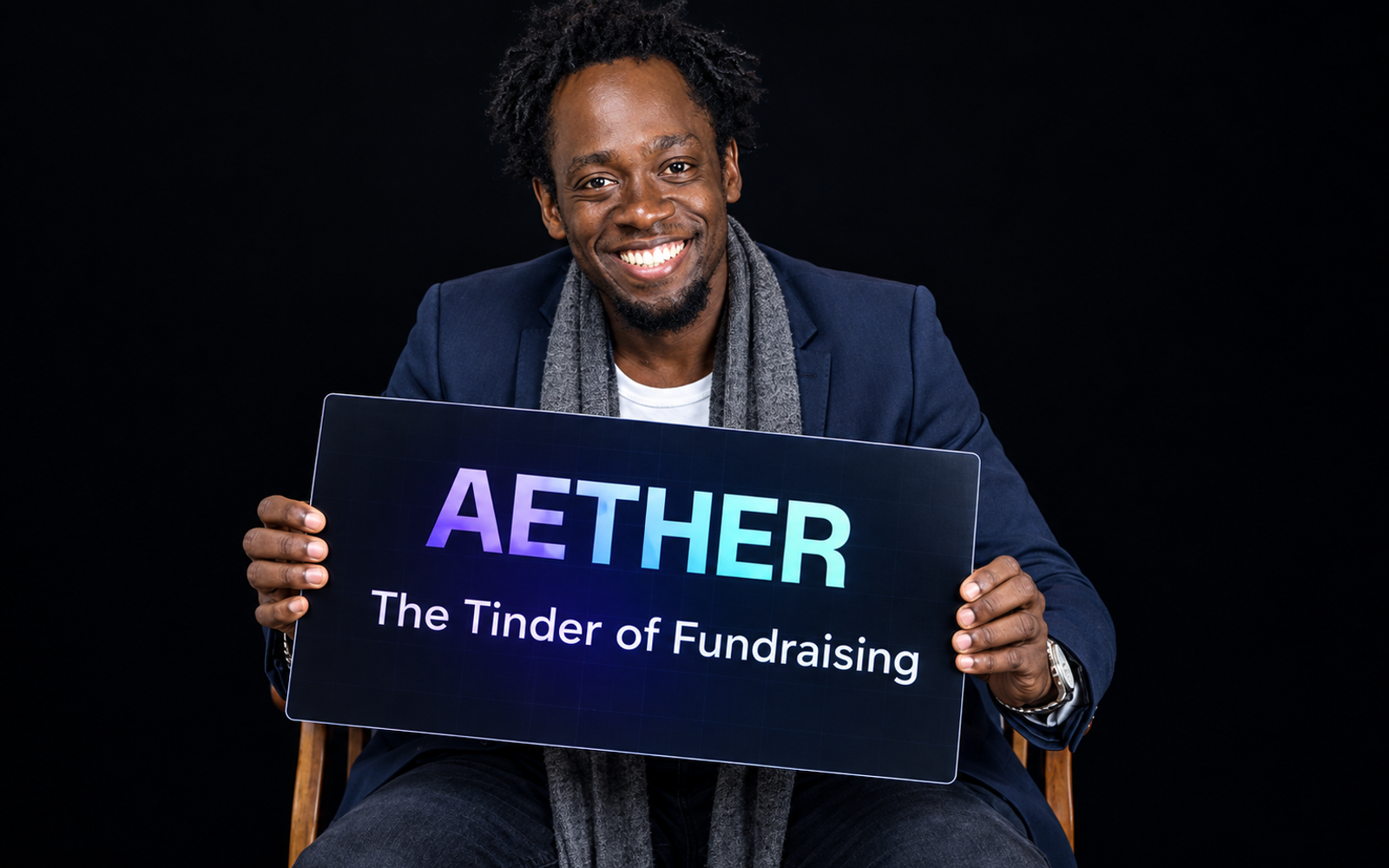
Platforms like AETHER by IRIS Vision Capital are beginning to test whether infrastructure can reduce that friction, moving deal sourcing away from exclusively relationship-dependent discovery toward a model where technology can surface relevant counterparties across markets. Whether the model proves out at scale will depend less on the interface than on the quality of the underlying match.
The venture industry's next competitive advantage may not come from building the largest database of capital or companies. It may come from building the most accurate layer between them.
The future of deal flow is not about knowing more people. It is about knowing which ones are worth meeting.
Comments (0)
No comments yet. Be the first to share your thoughts.