The 2026 World Cup's Expanded Format Is Reshaping Summer Culture
With 48 teams, three host countries, and likely the final World Cups for Lionel Messi and Cristiano Ronaldo, the 2026 tournament is already the biggest in the event's history. Here's how the new format is changing the way fans experience the game.

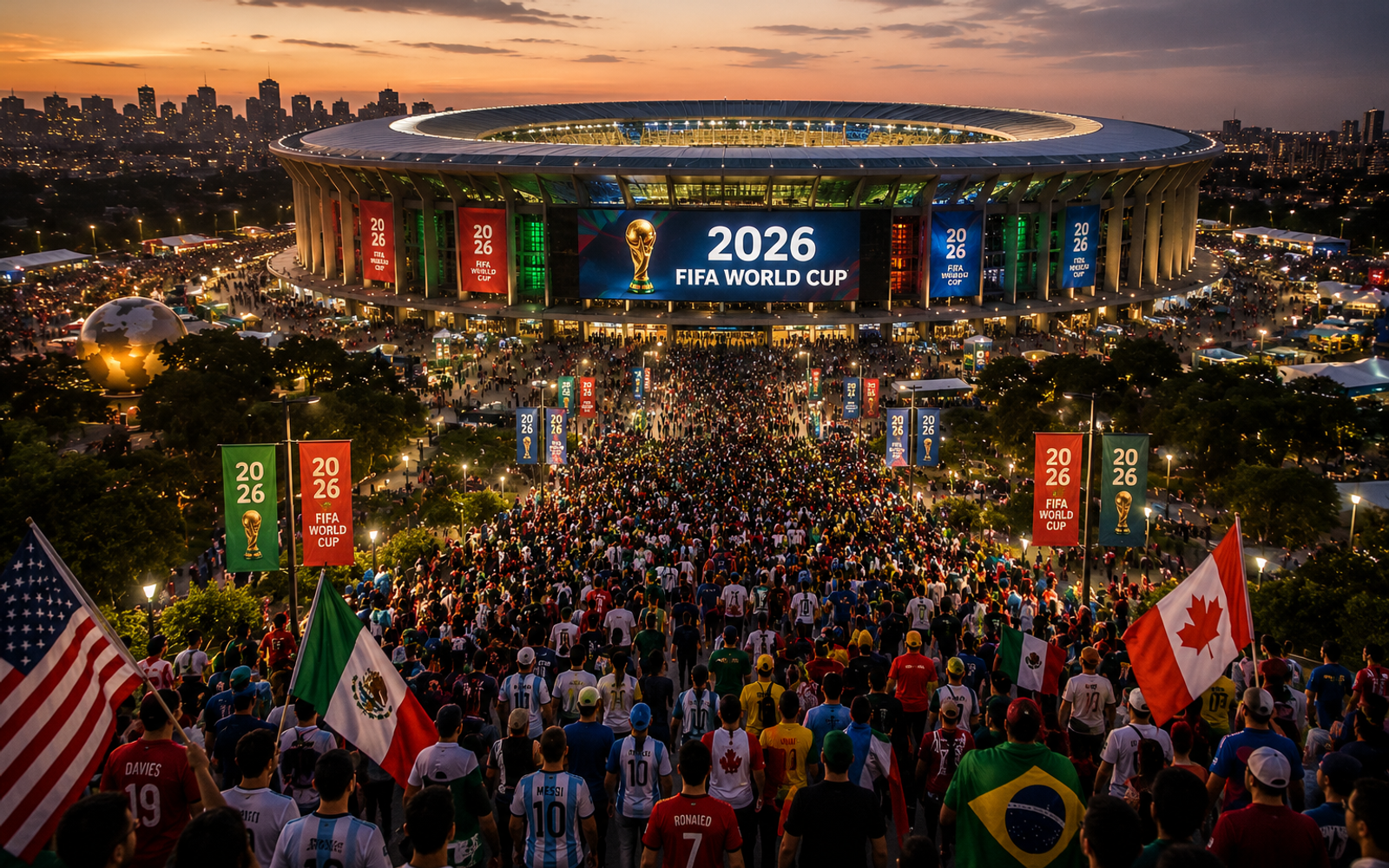
The 2026 FIFA World Cup, jointly hosted by the United States, Mexico, and Canada, kicked off June 11 at Estadio Azteca in Mexico City and is already unlike any World Cup that came before it. For the first time in the tournament's history, 48 national teams are competing, up from 32, split into 12 groups of four. That expansion adds an entirely new knockout round: instead of 16 teams advancing out of the group stage, 32 teams move on, including all 12 group winners, all 12 runners up, and the eight best third place finishers.
The format change is more than a numbers game. It means more countries get a genuine shot at the tournament, more matches get played (104 in total, up from 64 in 2022), and more cities across North America get to host World Cup soccer. Sixteen stadiums across 16 cities are sharing hosting duties, with eleven venues in the United States alone, stretching from Seattle and Los Angeles to Atlanta, Boston, and Philadelphia.
This may also be the last World Cup appearance for two of the sport's defining stars. Lionel Messi is playing for Argentina, the defending champions, while Cristiano Ronaldo continues to start for Portugal, who beat Uzbekistan 5 0 in their most recent group match. Both players are widely expected to retire from international play after this tournament, giving every one of their remaining matches an added layer of significance for fans who grew up watching their rivalry define the sport.
The co host nations have their own storylines. The United States opened with a 4 1 win over Paraguay before beating Australia 2 0, while Canada has looked sharp in Group B, including a 6 0 win over Qatar. Mexico, hosting the opening match at the same Azteca Stadium where Diego Maradona scored his most famous goal in 1986, started its campaign with wins over South Africa and South Korea.
New rules are part of the story too. Mandated hydration breaks have been added to help players cope with summer heat across host cities, and a new "smart ball" carrying embedded sensor technology is being used to assist officials with offside calls and other close decisions, part of FIFA's continued push toward more precise officiating.
For North American audiences, the tournament's scale, expanded format, and built in farewell narratives around two of the sport's biggest legends are combining to make this summer's World Cup as much a cultural moment as a sporting one, reshaping travel plans, viewing habits, and city level events across all three host countries through the final on July 19 at MetLife Stadium in East Rutherford, New Jersey.
Comments (0)
No comments yet. Be the first to share your thoughts.