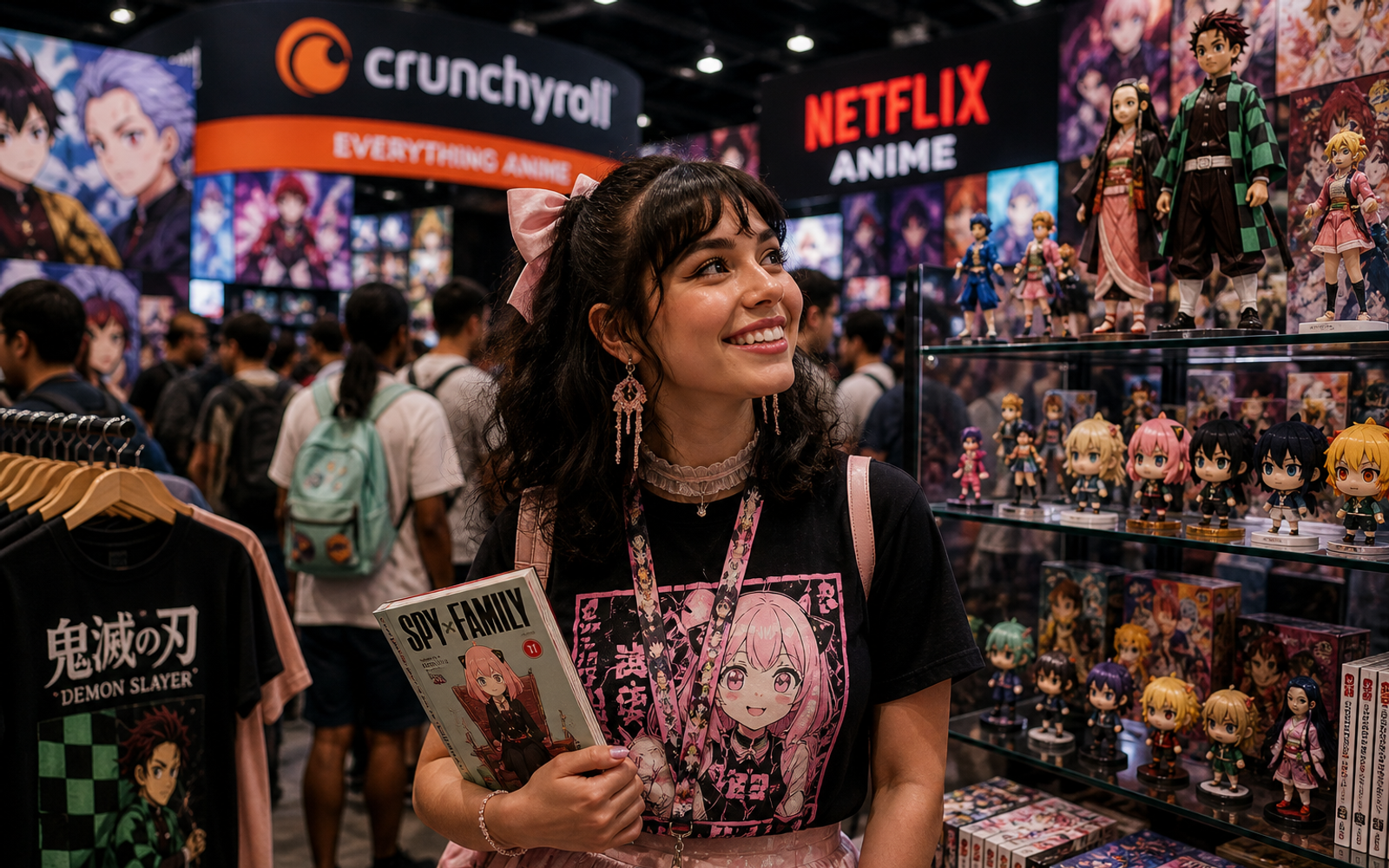
How Female Fans Remade Anime Into a $100B Industry
Anime now earns more abroad than in Japan, and female viewers are driving a boom projected to hit $103 billion by 2035.

Anime has crossed a line that the industry spent decades insisting would never come: international revenue has officially overtaken Japan's domestic sales. For most of the medium's history, the business ran on a simple internal logic. A series premiered in Tokyo, earned back its budget through home video and toy shelves, and the foreign market was treated as a pleasant bonus. That order has inverted.
The scale is dizzying. Market researchers put the global anime business at $38.98 billion in 2025 and project it will reach $102.99 billion by 2035, a compound annual growth rate of 10.2 percent, according to Market Research Future. Some estimates now suggest more than a third of the planet, roughly 2.88 billion people, have watched anime at some point.
But the most significant change in this boom is who the audience actually is. The growth isn't just geographic. It's demographic, and it has upended assumptions the industry carried for decades.
The Home Market Is No Longer the Whole Story
Japan's domestic market built anime's grammar, its weekly TV slots, its manga-to-screen pipeline, its summer blockbuster calendar. Overseas, the medium was a cult import for decades, subtitled tapes passed hand to hand. That era ended when streaming platforms began paying real money for global rights, and the export numbers stopped being rounding errors.
So the milestone matters beyond the balance sheet. When foreign revenue exceeds domestic, the center of gravity shifts. Licensing decisions, production priorities, and even the stories that get greenlit now have to account for viewers in São Paulo, Paris, and Manila, not just the Tokyo commuter who picks up a manga at the convenience store.
The US-China trade war added a geopolitical wrinkle. New compliance checks made licensing Chinese-origin animation more expensive, so global platforms are diversifying their supplier base toward Japan, South Korea, and Southeast Asia. Anime's global expansion is now tangled up in supply-chain politics, a sentence that would've been absurd fifteen years ago.
Female Viewers Flipped the Old Demographic Map
The audience inside those numbers looks nothing like the stereotype that carried the medium abroad for years, the teenage boy with a wall scroll and a fighting series. Globally, women now make up roughly half of anime viewership, according to industry tracking that has finally started paying attention. The change is visible in what travels: romance, drama, and slice-of-life titles now export as reliably as the battle epics.
American data tells the same story from the other side. Surveys show anime viewers in the US skew young, with around 45 percent between 18 and 24, and the gender gap that once defined the fandom has collapsed. Streaming platforms have adjusted. Catalog choices, key art, and merchandise lines all lean harder into the character-driven stories that female subscribers watch in volume.
None of this is a surprise to anyone who watched the fandom closely. The female audience was never small. It was just underserved, a niche the industry acknowledged with a shojo shelf and then ignored, and the global streaming shelf has made its size impossible to deny.
Streaming Turned Anime Into a Weekly Ritual
Streaming did more than distribute anime. It rewired how the medium is consumed. The segment is growing faster than the wider market, with the anime streaming business forecast to more than double from $7.5 billion in 2024 to $14.65 billion by 2030. The simulcast model, which lands a new episode worldwide within hours of its Japanese broadcast, turned release nights into a shared global event, and the weekly format is back in fashion because anime fans proved they generate engagement that binge drops cannot match.
The platforms have the receipts. Crunchyroll, which started as a pirate subtitling operation, now reports more than 17 million subscribers across 200 countries, according to BBC News. Netflix says half of its global users watch anime and that viewership has tripled in five years, a disclosure the company made while unveiling an expanded slate at Anime Expo, as The Hollywood Reporter noted.
Anime behaves differently from other streaming genres, which is exactly why the platforms keep funding it. Just as the expanded World Cup format turned a regional tournament into a month-long global ritual, anime's simulcast calendar has made a Tokyo broadcast schedule the appointment of choice across continents. Subscription services are learning that a show's value isn't only in its premiere weekend but in its ability to keep a subscriber through a season and into the next. Anime does that reliably, and it does it globally, which makes it the rare content bet that pays off across every time zone at once.
Merchandising Is the Real Engine
Read Also
NVIDIA Enters the Agentic EraUnderneath the streaming hype sits the actual engine: merchandising. Industry analysts consistently rank licensed products and merchandise as the most profitable slice of the anime economy, and the logic is simple. A hit series can generate more from figures, apparel, and brand collaborations than from every streaming license combined.
The fan economy has also leaked into the mainstream. Fashion houses and streetwear labels keep queueing for anime collaborations, and the visual language of the medium, the expressive eyes, the saturated skies, the exaggerated motion, now reads as a design signal to people who've never finished a single series. Anime songs have followed the same path, with Japanese artists selling out arenas abroad and Gen Z treating anime openings as a music discovery pipeline, a spillover BBC Culture documented earlier this year.
And the merchandise follows the new audience. Retailers have finally started tracking who actually buys, and the romance and drama lines that were once an afterthought next to action franchises are expanding. The merch shelf is where the demographic shift becomes a balance sheet.
None of this means anime's Japanese core is fading. The studios, the directors, and the manga editors still set the creative terms, and the global audience is learning its rhythms rather than replacing them. But the industry now has to decide whether it will let the new viewers shape what gets made, or keep betting on the formulas that predate them. Tokyo's studios answer to an audience that doesn't wait for dubs and doesn't fit the old profile, and the female half of that audience has already shown exactly what it will pay for. The medium got its global future, but the half of the audience that funded it is still waiting for shows that treat its tastes as the main event rather than a side quest.
Comments (0)
No comments yet. Be the first to share your thoughts.