When Literature Learns to Dance
The Edinburgh Book Festival tears down the walls between page, stage, and song. Ali Smith meets Noh theatre. Words become music.

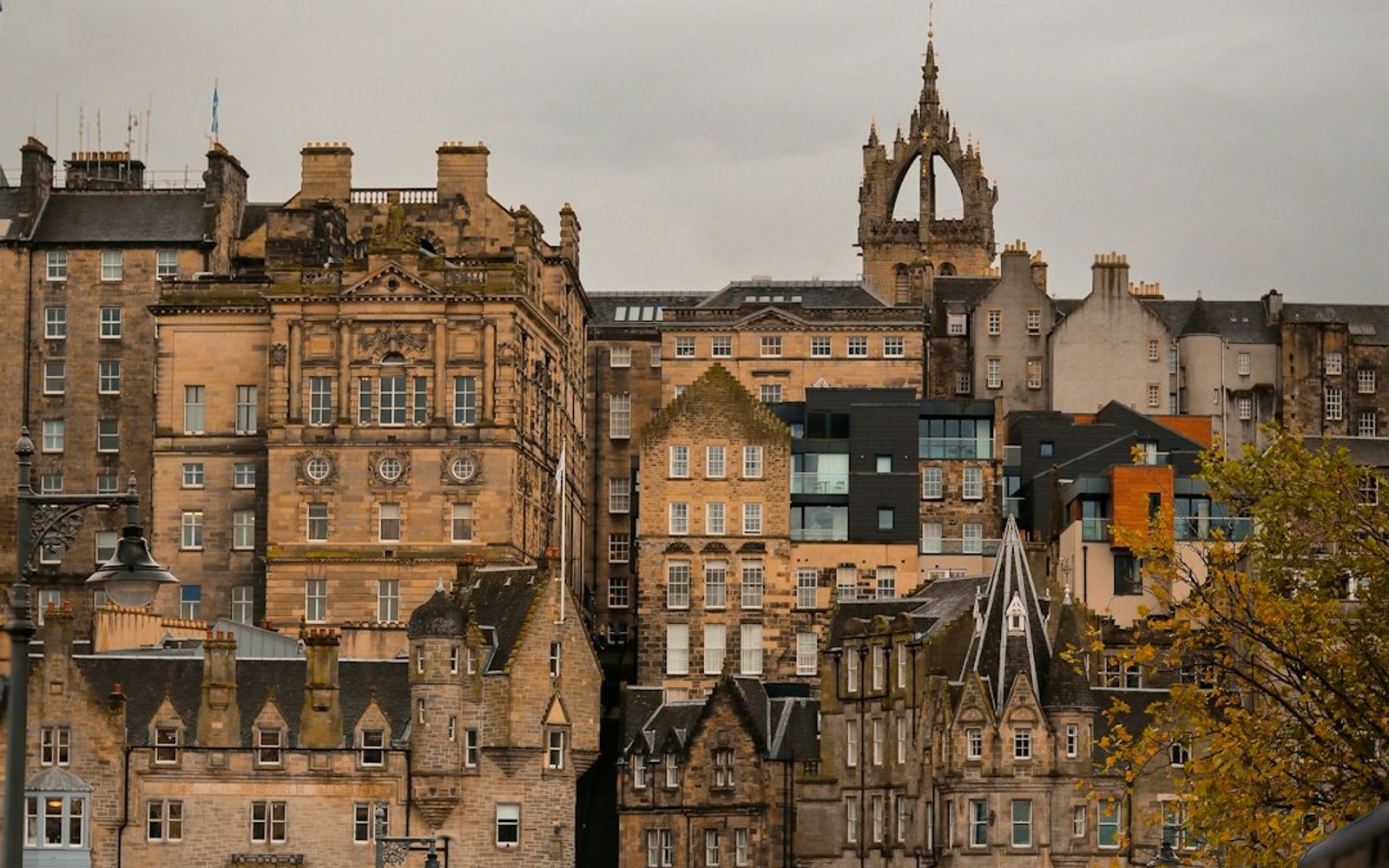
A writer's words, lifted off the page and handed to a Japanese Noh theatre troupe. A novelist's sentences turned into sheet music. The Edinburgh International Book Festival, that grand old institution of Scottish letters, has spent decades proving that books matter. But its 2026 programme, running from August 15 to 30 under the banner "Changing Your Mind," asks a different kind of question. Not whether books matter. But what else they can become.
The festival programmed 600 events for book lovers from age 1 to 100. But the ones drawing the sharpest attention break the form entirely. Organisers paired Kathleen Jamie's prose with Japan's Noh Reimagined theatre company in what the North Edinburgh News calls a "highly experimental production." Musician Aidan O'Rourke is involved too.
Meanwhile, musicians are setting Ali Smith's words to music. The Guardian reports that the festival is moving "from tents to trebles." The phrase is playful. The intent is serious.
This is not a gimmick. It's a recognition that literature, especially in 2026, operates inside a crowded attention economy. People who read are also people who stream. People who go to the theatre also scroll through TikTok. The old silos that kept art forms separate were useful for critics and academics. But audiences have always been messier. They carry their loves across mediums without asking permission. The festival is finally catching up.
Read Also
Stop Using AI Like a SpellcheckerThe Body in the Text
What makes the Jamie-Noh collaboration so striking is its refusal to treat writing as a purely cerebral act. Noh theatre is ancient Japanese performance that moves slowly. Every gesture carries weight. Every pause is a sentence. To drop Kathleen Jamie's nature writing, with its earthy Scottish particularity, into that slowed-down, highly ritualised space is to ask what happens when landscape meets body.
The answer, according to early previews, is something that resists easy description. Not a reading. Not a play. Something in between. "Highly experimental production" is accurate without being fully satisfying. That is the point. Some experiments resist labels. And this is happening alongside a broader cultural moment where the borders between art forms are dissolving at speed. Look at music. Future just announced a new album called The Real Me. Nettspend is teasing a project alongside OsamaSon. Widowspeak and Lambchop are on the latest Pitchfork Selects playlist. These are not literary events. But they are part of the same current: artists refusing to stay in their lanes, pulling from poetry, visual art, fashion, and film to make records that feel bigger than just music.
From Scottish Moors to Global Stages
The Edinburgh festival's programming choices carry a quiet geopolitical resonance. By pairing a Scottish writer with a Japanese theatre company, the festival models the kind of cultural exchange that happens at the edges of global power. Not the New York-London corridor that dominates so much of the literary conversation. But a Scotland-Japan dialogue, routed through ancient performance traditions and contemporary nature writing.
This matters because the centres of cultural gravity are shifting. Lagos, Accra, and Nairobi have been building their own literary ecosystems. The Ake Arts and Book Festival in Nigeria, the Writivism festival in Uganda, the Nairobi Literary Exchange. These events do not wait for permission from the old capitals. They create their own circuits. The Edinburgh programme, by reaching toward Noh theatre and experimental music, signals that the old festival model understands something: the audience is already global. The programming has to catch up.
A similar impulse is visible in fashion. Taylor Swift recently swapped her signature dresses for boho denim and platforms. Max Mara's Resort 2027 collection leaned into shapes that felt more architectural than wearable. The boundaries between fashion, art, and lifestyle have thinned to transparency. NovaRift has covered this phenomenon before, how Elie Saab designed a plane and turned an object of engineering into a piece of couture. The same logic applies here. When Ali Smith's words become sheet music, the book stops being a product. It becomes raw material for something else.
What Attention Looks Like in 2026
The festival's theme, "Changing Your Mind," is worth sitting with. It suggests that the purpose of a book festival is not to confirm what you already believe. It is to unsettle you. To dislodge you from comfortable positions. A Noh performance of Scottish nature writing is not designed to be easy. It is designed to change the temperature of your attention.
And attention is the scarce resource now. Not talent. Not funding. Just the willingness of a room full of people to look in one direction for an extended period. The Edinburgh programme, with its 600 events and its cross-disciplinary gambles, is betting that attention can be earned through surprise rather than familiarity. That a reader who comes for Ali Smith might stay for a Japanese theatre troupe and walk out thinking differently about what a story can hold.
The Olivia Rodrigo Sad Girl album cycle showed how a single artist could channel grief and rage into something that felt communal and commercially massive at the same time. Music, literature, fashion. The lines keep blurring because audiences keep crossing them. The festival is not leading the charge. It is following the audience to a place the audience already went.
No Neat Ending
There is something bracing about a book festival that refuses to fetishise books. The Edinburgh International Book Festival, by chasing the edges of what literature can become, is making a quiet argument. That stories are not precious objects to be preserved in amber. They are living things. They change shape. They leave the page and borrow a dancer's body or a musician's breath and become something else entirely.
Whether it all works is almost beside the point. The experiment is the point. The willingness to put Kathleen Jamie's sentences into a Noh performer's mouth and see what survives the translation. That is the kind of risk that feels increasingly rare in a culture obsessed with optimisation and algorithm-proof content. A book festival that stages a Noh performance is not optimising anything. It is trusting that art, when pushed far enough, finds its own audience. That is the real story here. Not the festival itself. But the willingness to let the form break open and see what crawls out.
Comments (0)
No comments yet. Be the first to share your thoughts.